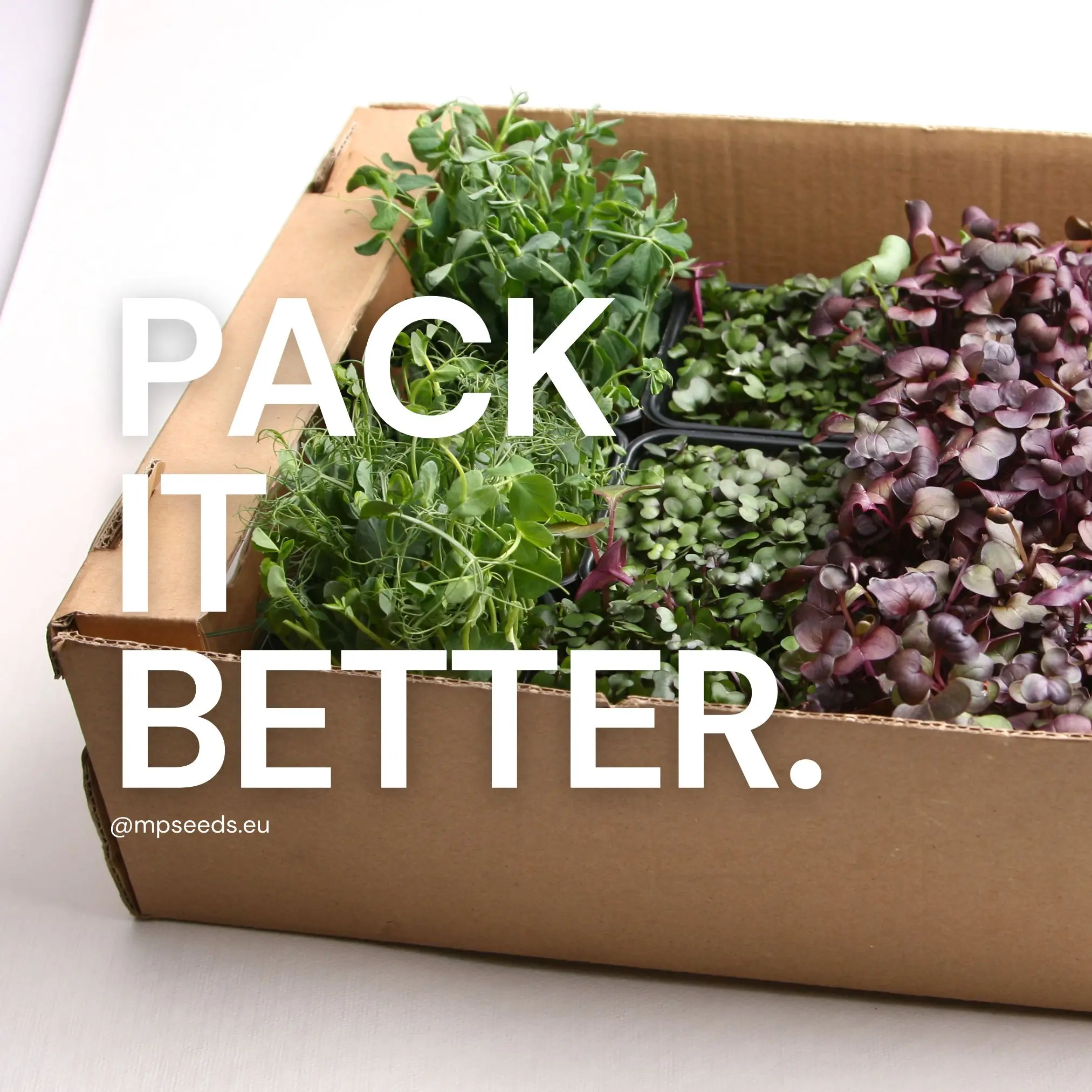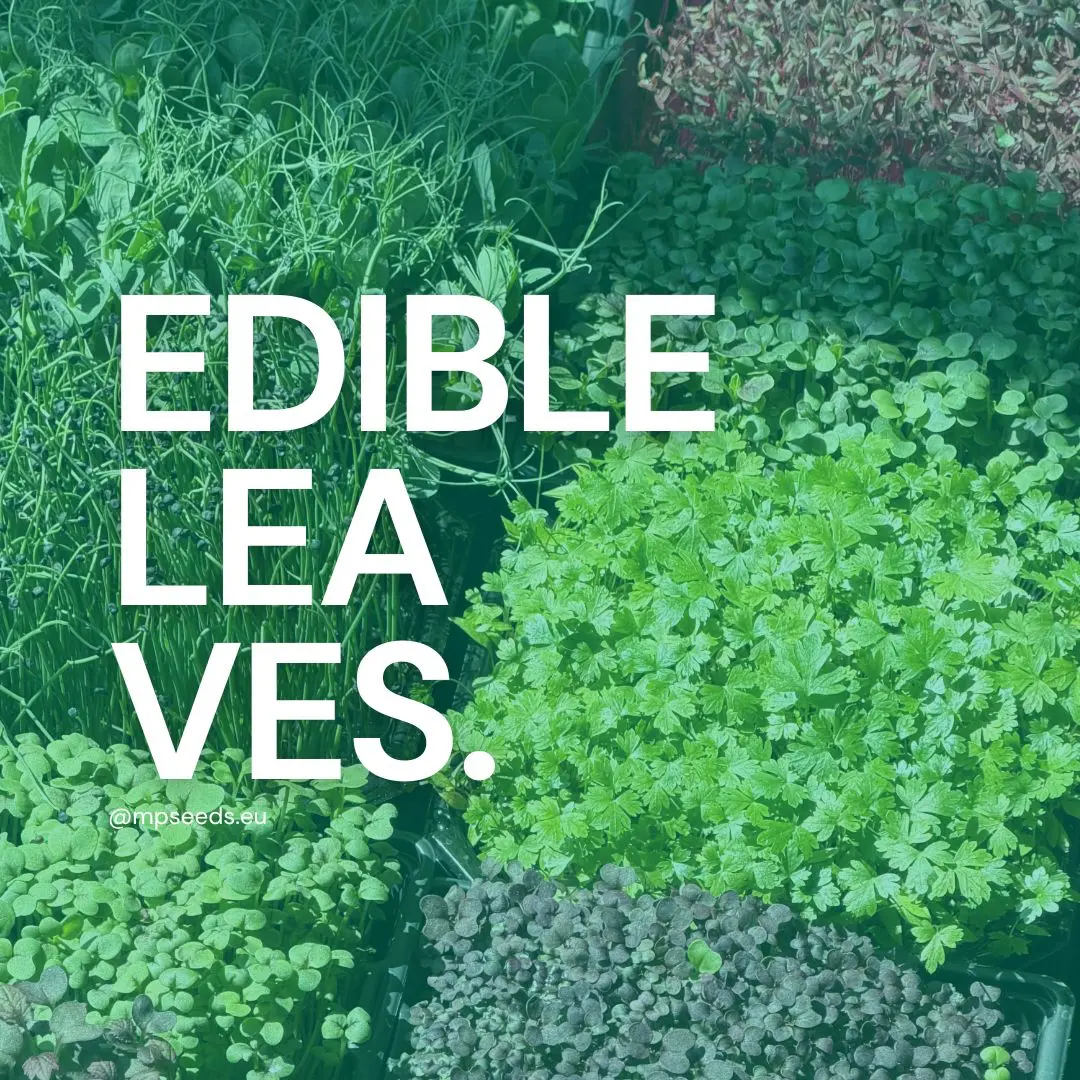
Fresh microgreens are delicate, highly perishable, and surprisingly sensitive after harvest. Even beautifully grown trays can quickly lose texture, aroma, and visual quality if packed incorrectly. This is why microgreens packaging matters just as much as growing conditions. Good packaging protects microgreens from excess moisture, physical damage, and premature wilting while helping them stay fresh longer during transport or storage. Whether you grow microgreens commercially or harvest small batches at home, understanding how to package microgreens properly can significantly improve shelf life and presentation.
Menu
- Microgreens Bible (all blogs) (82)
- The ABCs of microgreens (33)
- Microgreens Business (27)
- Microgreens Growing Instructions (35)
- Cooking with microgreens (13)
- Recipes (8)
- Pea Microgreens (3)
- Supplies (7)
Do you have a lot of microgreens seeds, but don't know how to store them properly? Discover the optimal storage conditions, including temperature, humidity and light exposure, to ensure longevity and viability. Don't let your seeds go to waste - master the art of seed storage and grow a thriving microgreens garden today!
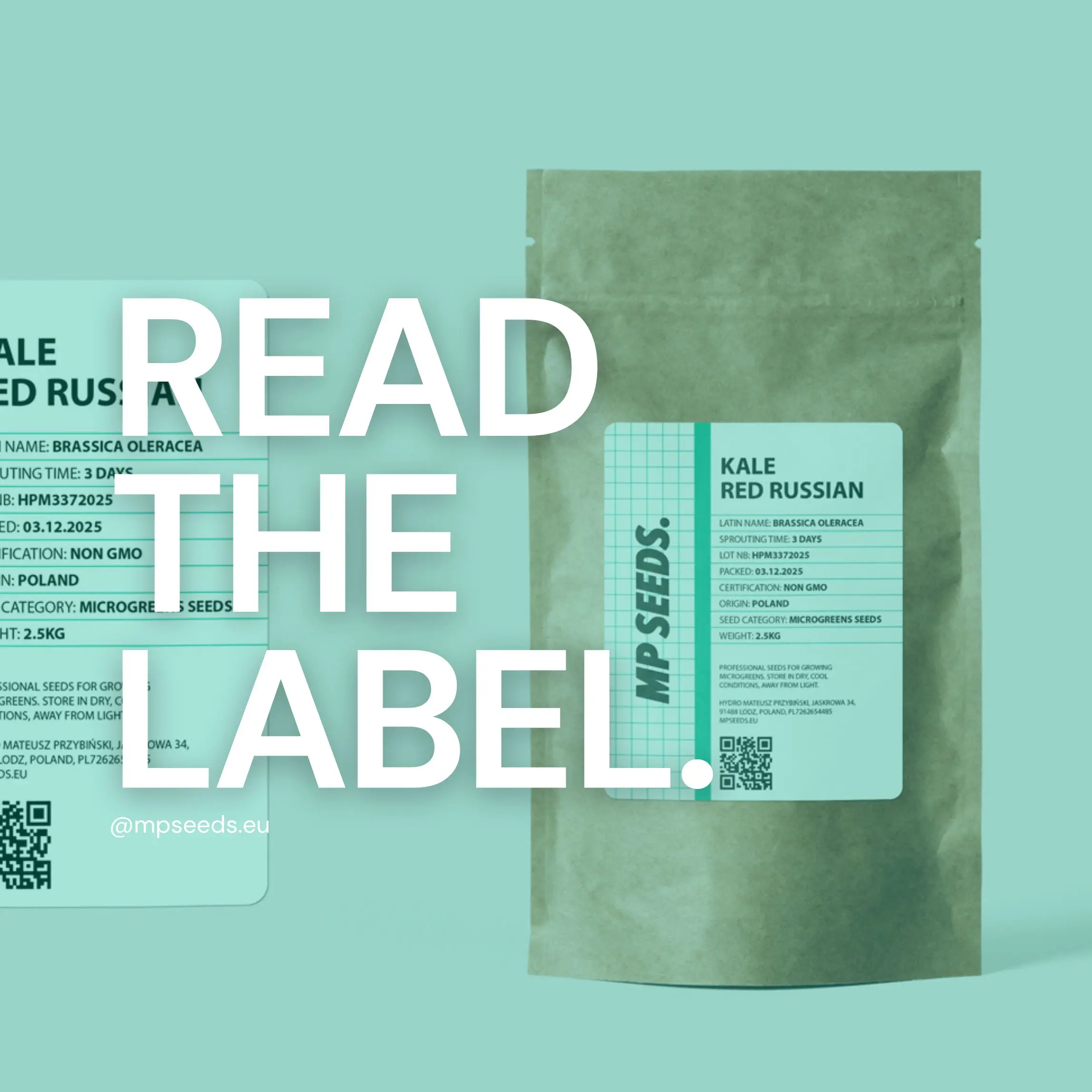
Your seeds may be inside the bag, but the label is what growers rely on every day. A professional microgreens seed label is more than packaging, it helps organize production, track seed batches, plan sowing cycles, and maintain traceability.
We break down what information every professional microgreens seed label should include, from lot numbers and sprouting time to plant passports and organic certifications. We also explain the different types of labels used in the industry and show how MP SEEDS approaches labeling to support both hobby growers and professional microgreens producers