


Just enter your tray dimensions and the calculator will provide precise seeding rates, soaking instructions, blackout days, and growing time.
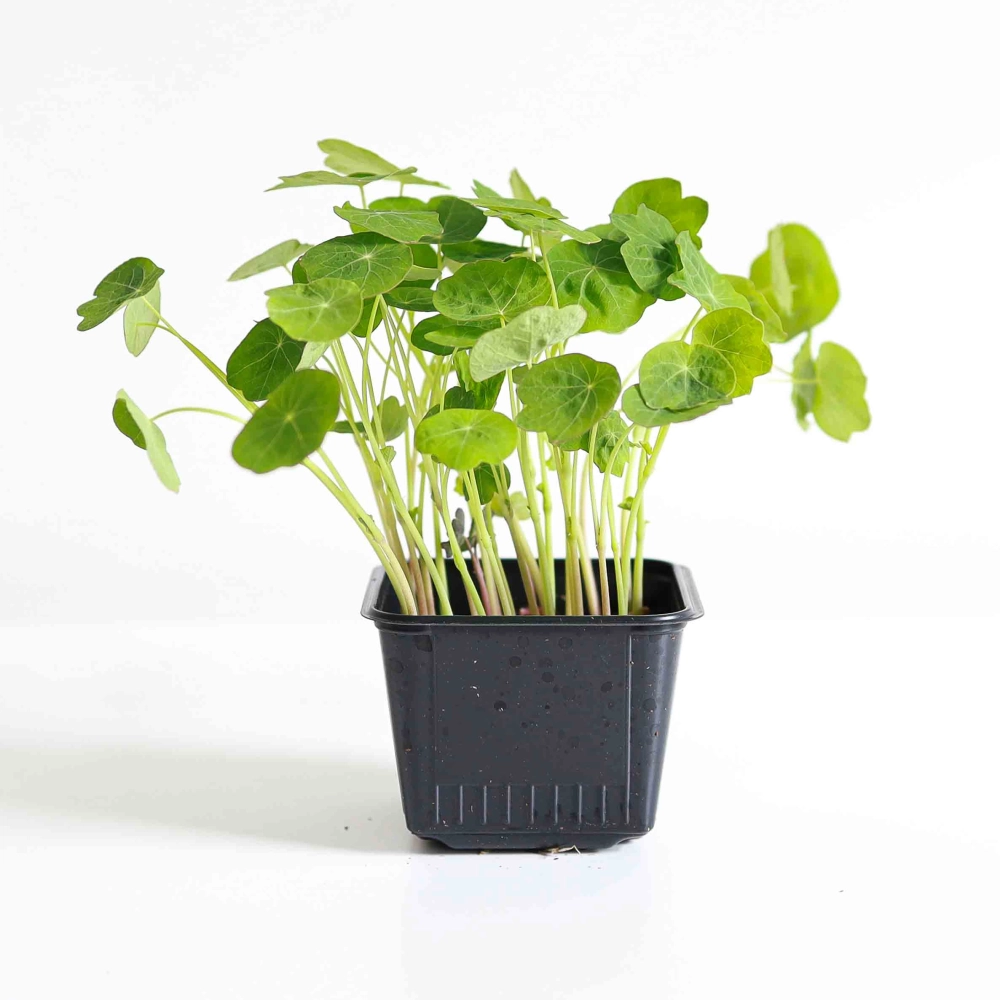
Nasturtium, Tom Thumb Microgreens Seeds
Availability:
available
Dispatched within:
up to 2days
Price:
€6.00
including Polish VAT
Regular price:
The lowest price during 30 days prior to the reduction:
product unavailable
* - field mandatory
Product code:
NASTURT-TOM
 Description
General information about Nasturtium Tom Thumb
Nasturtium Tom Thumb microgreens seeds produce tender, light green leaves with a refreshing, peppery taste. Choose Tom Thumb for rounded, shield-shaped leaves that add both flavour and a distinctive outline to salads, sandwiches and plated dishes.
Tom Thumb is a compact, non-trailing nasturtium variety. It can be grown for young edible leaves or allowed to develop into plants with single, spurred flowers in mixed colours. Microgreens and flowers are two different harvest stages: the young-leaf crop typically takes around 14–17 days, with cooler germination potentially extending the schedule, while flowering requires a longer growing period and a less dense sowing.
These conventional Tom Thumb nasturtium seeds have approximately 8 seeds per gram. For a microgreens crop, use 200 g per 10 × 20-inch tray. Tom Thumb has lighter green foliage than Nasturtium Empress of India, making it useful when you want a fresher, lighter leaf colour on the plate.
| Variety | Nasturtium Tom Thumb |
|---|---|
| Certification | Conventional seeds |
| Seed Category | Microgreens seeds |
| Latin Name | Tropaeolum majus nanum |
| Difficulty Level | Medium |
| Seed count per gram | Approximately 8 seeds |
| Sow density 10x20 tray | 200 g per 10 × 20-inch tray for microgreens |
| Sprout in low temp. | Cool germination at around 10°C in the MP SEEDS method; slower emergence |
| Soaking | Up to 6 hours in warm water |
| Watering | Light, as needed to maintain moisture |
| Blackout Time | Approximately 7 days; cool germination may take longer |
| Total growing time | Usually 14–17 days for young leaves; cooler germination may extend this |
| Taste | Refreshing, peppery and slightly spicy |
| Stem Color | Green |
| Leaves Color | Light green |
| Nutrition benefits | Fresh edible leaves to add variety to meals |
Taste and appearance of Nasturtium Tom Thumb
The young leaves have a refreshing peppery flavour with a little heat, reminiscent of rocket. Their rounded, shield-like shape gives a clear visual contrast to slender pea shoots or smaller radish leaves. The leaves are tender, with enough structure to stand out in a garnish.
Tom Thumb's light green foliage is its main visual distinction from the darker Empress of India. Choose it for bright green accents in mixed salads or for a few clearly shaped leaves on a finished plate.
When grown on to flowering, the compact plants produce single flowers with a spur and a funnel-like shape. The colour mix includes yellow, orange and red. Flowers have a mild peppery flavour with a watercress-like note and can bring colour to sweet or savoury presentations.
How to grow Nasturtium Tom Thumb
Grow these nasturtium microgreens seeds in soil-based or peat-based growing medium, or loose coco coir. MP SEEDS recommends loose medium rather than growing mats because it holds moisture more evenly around the seeds. Nasturtium is more demanding than radish or broccoli and may take a few attempts to get right.
The usual guide is around 7 days of germination and blackout, followed by 7–10 days of further growth. Cooler germination can take longer, so assess the crop rather than relying on a fixed calendar.
- Soak in warm water for up to 6 hours. Drain before sowing.
- Prepare and sow. Moisten the loose growing medium and spread 200 g of seed evenly across a 10 × 20-inch tray. A light covering of the medium helps maintain moisture around the seeds.
- Manage cool germination and blackout. MP SEEDS recommends around 10°C for slower, more even germination in its growing method. At higher temperatures, some shoots may emerge quickly and stretch while other seeds are still germinating. Use about 7 days of blackout as a guide; at cooler temperatures, emergence may take longer. Check moisture and shoot development regularly.
- Move into light and choose the crop shape. Once the shoots have emerged, provide adequate light. MP SEEDS suggests continuous light (24 hours a day) for shorter, more compact plants, or 12 hours of light followed by 12 hours of darkness for taller shoots that are easier to cut. These are growing options for adjusting the crop shape; assess the result with your own lights and growing conditions. The light stage usually takes around 7–10 days.
- Water lightly as needed. Keep the medium moist without saturating the tray. Provide airflow and check moisture before watering again.
- Harvest the young leaves. The usual growing guide is 14–17 days, but cooler germination may extend this period. Cut with clean scissors when the leaves have the appearance and texture you want. For a possible second leaf harvest, follow MP SEEDS' advice to cut only the upper leaves and leave the lower leaves and lower part of the plant intact. Continue caring for the plants and harvest again only if new leaves develop; cutting the whole shoot above the medium is a different harvest method.
Growing for edible flowers
For flowers, sow more sparsely and allow the plants to grow beyond the microgreens stage. The 200 g tray rate and 14–17-day harvest refer to young leaves. Flowering plants need space and a longer growing period to develop blooms.
More practical guidance is available in the nasturtium microgreens growing guide.
How to use Nasturtium Tom Thumb
Use nasturtium microgreens for peppery flavour and light green leaf shapes. Flowers from plants grown on to flowering provide a separate colourful garnish. Add the leaves or flowers close to serving time when you want to show their freshness and shape.
- Salads: mix young leaves into the greens for a peppery accent; use flowers to decorate the finished salad.
- Sandwiches and wraps: add leaves for flavour and texture, with whole flowers or petals as a finishing garnish.
- Soups and stews: sprinkle chopped leaves over the finished dish or float a flower on the surface.
- Egg dishes: finish scrambled eggs or omelettes with leaves, or decorate devilled eggs and egg salads with flowers.
- Pasta and rice: mix in chopped leaves close to serving and use a flower for a colourful finish.
- Cheese platters: arrange leaves alongside cheeses and use flowers as an edible centrepiece.
- Flavoured butter and cream cheese: blend in chopped leaves and decorate the spread with flowers.
- Water and cocktails: freeze flowers into ice cubes or float them as a garnish in a drink.
- Stir-fries: add leaves towards the end of cooking; use flowers at the finish.
- Desserts: decorate cakes, tarts or puddings with flowers, or use petals to flavour syrup or honey.
- Creative plating: arrange the rounded leaves and flowers into patterns for a distinctive presentation.
Rinse harvested leaves and flowers thoroughly before use. Grow edible crops with methods suitable for food production and use plants intended for culinary use.
What are the nutritional benefits of Nasturtium Tom Thumb
Tom Thumb adds fresh edible leaves to a varied diet, with a peppery flavour that can make a small portion noticeable in a meal. Try the young leaves in salads, wraps or bowls alongside a range of other vegetables.
Their value in the kitchen combines freshness, flavour and shape. Flowers from a longer-grown crop offer another way to add variety and colour to a finished dish.
FAQ about Nasturtium Tom Thumb
How does Tom Thumb differ from Empress of India?
Tom Thumb has lighter green foliage, while Empress of India is the darker-leaved option. Tom Thumb is compact and non-trailing, and its rounded leaves bring a bright green finish to a dish.
How long does the microgreens crop take?
The usual guide is around 14–17 days: approximately 7 days for germination and blackout, followed by 7–10 days of further growth. Cooler germination can extend the schedule. Observe the leaves when deciding when to harvest.
Does germination happen evenly?
Nasturtium can germinate unevenly. MP SEEDS recommends cooler germination at around 10°C to help manage uneven emergence, allowing extra time. At higher temperatures, early shoots may stretch while other seeds are still germinating. Check the tray regularly and maintain moisture and airflow.
Do the seeds need soaking?
Yes. Follow the MP SEEDS method: soak in warm water for up to 6 hours before sowing. The microgreens sowing rate is 200 g per 10 × 20-inch tray.
Can I harvest flowers at the microgreens stage?
Flowers develop later. To grow for edible flowers, sow more sparsely and allow the plants to continue growing beyond the young-leaf stage.
Are nasturtium sprouts the same as the leaves described here?
This growing method produces young leaves and shoots in a tray, cut above the growing medium. The offer is for microgreens and plants grown on for edible flowers.
Where can I find other nasturtium varieties?
Browse the nasturtium seeds collection or read the growing guide for more about cultivating young leaves.


