Just enter your tray dimensions and the calculator will provide precise seeding rates, soaking instructions, blackout days, and growing time.
Perilla Shiso BiColor, Microgreens seeds
Availability:
available
Dispatched within:
up to 2days
Price:
€14.30
including Polish VAT
Regular price:
The lowest price during 30 days prior to the reduction:
product unavailable
* - field mandatory
Product code:
SHISO-BICOLOR
 Description
General Information about Perilla Shiso BiColor microgreens
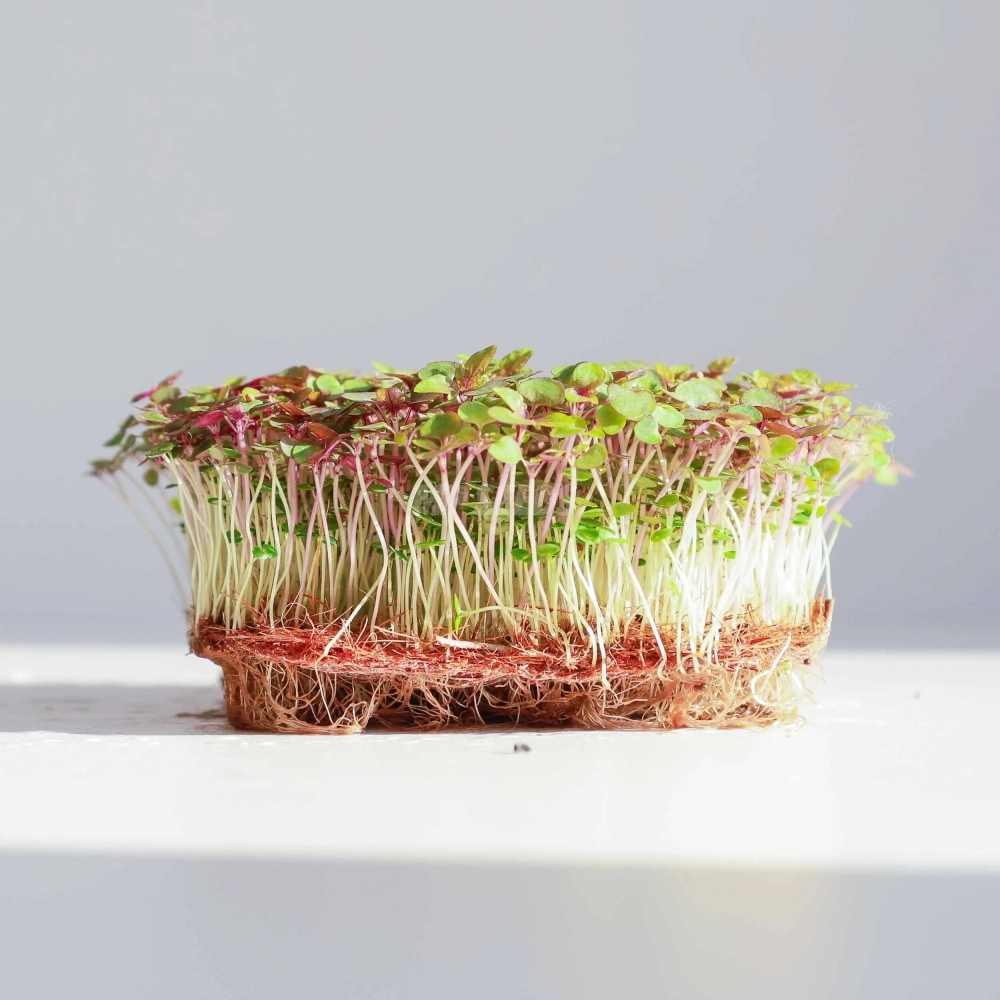
Shiso BiColor microgreens (Perilla frutescens) are an eye-catching Asian variety with a distinctly ornamental character. Their leaves are deep green on top and pink-purple underneath, paired with delicate pink stems that create a striking contrast in refined plating.
Closely related to Perilla Red Shiso and reminiscent of Basil Red in aroma, Perilla Shiso BiColor stands out with its distinctive "dual-tone" leaf pattern. Its flavour shares some notes with these relatives, while its colour and aroma make it a valued choice in Japanese, Korean, and fusion cuisine.
These conventional seeds are intended for microgreens production and are suitable for intermediate growers. Their distinctive appearance makes them a useful addition to a varied microgreens range.
Taste and Look of Perilla Shiso BiColor
Shiso BiColor microgreens develop delicate pink stems and two-tone leaves: deep green on the upper surface and pink-purple underneath. This contrast makes the crop particularly effective in dishes where the garnish needs to be visible from every angle.
The flavour is milder than that of mature shiso leaves, with fresh herbal and basil-like notes. It adds aroma without overpowering delicate ingredients, while the fine texture keeps the finished plate light and precise.
How to Grow Perilla Shiso BiColor microgreens?
Sow without soaking
Do not pre-soak Shiso BiColor seeds. Spread them evenly over a moist growing medium and press them gently to improve contact. Peat-based substrates, coco or hemp mats, and hydroponic systems can all work; consistent moisture matters more than the medium you choose.
Allow time for germination
Shiso BiColor is slower to emerge than many common microgreens. The first seedlings usually appear after 5–7 days. A standard covered germination method can work, but if emergence is weak or uneven, place the tray under light and use a light-permeable film or fabric. This holds humidity around the seeds while still giving this light-responsive variety access to light.
Manage moisture
Keep the medium evenly moist, but never saturated. Once the roots are established, water from below when possible. Remove the humidity cover as the seedlings emerge, then provide steady airflow and enough light to develop compact growth and clear two-tone colour.
Harvest for size and colour
Shiso BiColor is usually ready to cut from around day 15. Harvest when the cotyledons are open and the first true leaves begin to show. Leaving the crop for a little longer produces larger leaves and a stronger aroma.
Pro Tip:
Shiso seeds are sensitive to environmental changes. To maintain high germination quality, store them at 5–10°C with 30% humidity and avoid temperature fluctuations.
How to Use Shiso BiColor?
Shiso BiColor microgreens are best used fresh and added shortly before serving so their colour, texture, and aroma remain at their best. They work particularly well with:
Sushi, sashimi, and poke bowls: the mild herbal flavour complements raw fish and rice.
Asian noodle dishes and soups: add just before serving to keep the leaves fresh.
Gourmet salads and fusion plates: use the two-tone leaves for strong visual contrast.
Cocktails and herbal infusions: add as an aromatic garnish.
Desserts with fruit, citrus, or floral notes: use sparingly for a fresh herbal accent.
The green and pink-purple contrast makes this variety especially useful for chefs, caterers, and food stylists who want a garnish with clear visual character.
What Are Nutritional Benefits of Perilla Shiso BiColor microgreens?
While specific nutritional data for Perilla Shiso Bicolor microgreens is not included in the provided materials, shiso in general is known to be rich in:
- Antioxidants
- Calcium and iron
- Omega-3 fatty acids (alpha-linolenic acid)
- Anti-inflammatory and antibacterial compounds
These elements are traditionally associated with support for digestion, skin health, and immune function — making shiso not only beautiful but also beneficial when added to a balanced diet.
Variety: | Perilla Shiso BiColor |
Certification: | Conventional Seeds |
Seed Category: | Microgreens Seeds |
Latin Name: | Perilla Frutescens |
Dificulty Level: | Easy |
Seed count per gram: | 700 |
Sow density 10x20 tray: | 10 |
Sprout in low temp.: | No |
Soaking: | No |
Watering: | Rare |
Blackout Time: | No Blackout - Germinate under light |
Total growing time: | 12-15 days |
Taste: | Mild herbal flavor |
Stem Color: | Pink |
Leaves Color: | Deep green top / Pink-purple bottom |
Nutrition benefits: | A, C, B1, B2, PP, Omega 3 |
FAQ about Perilla Shiso BiColor microgreens
Do I need to soak Shiso Bicolor seeds before sowing?
No soaking is needed. Simply sow Shiso Bicolor seeds directly on a moist growing medium and ensure they receive light from the start. Pre-soaking is not recommended for this variety.
Why didn’t my Shiso Bicolor microgreens germinate?
This microgreen is light-dependent and does not tolerate low temperatures. Germination issues are often caused by darkness during sprouting or cold conditions. Keep seeds above 18°C and exposed to light immediately.
How should I store Shiso Bicolor seeds?
For best germination results, store seeds at 5–10°C with 30% humidity in a cool, dry place. Avoid any temperature fluctuations — they can destroy germination quality and lead to poor results.
Is Perilla edible and safe to eat?
Yes, Perilla (Shiso) is 100% edible and widely used in Asian cuisine. Its microgreens are safe to consume raw and offer mild herbal flavor with culinary and nutritional benefits.
Is Shiso healthy for you?
Shiso microgreens are packed with antioxidants, anti-inflammatory compounds, and essential nutrients like omega-3s and calcium. They're often used in health-conscious and functional foods.
Can I grow Shiso Bicolor microgreens indoors all year round?
Yes, you can grow them indoors year-round with the right setup. Use a consistent light source, stable temperatures, and control airflow and humidity to prevent mold or slow growth.
How long does it take to grow Shiso Bicolor microgreens?
Perilla takes about 15 days from sowing to harvest. While slower than many other microgreens, the result is a visually striking and aromatic plant perfect for premium dishes.