Just enter your tray dimensions and the calculator will provide precise seeding rates, soaking instructions, blackout days, and growing time.
Salvia, Clary Sage Microgreens Seeds
Availability:
temporarily unavailable
Price:
€22.90
including Polish VAT
Regular price:
The lowest price during 30 days prior to the reduction:
product unavailable
Product code:
SAGE-CLARY
 Description
General Information Salvia, Clary Sage Microgreens Seeds
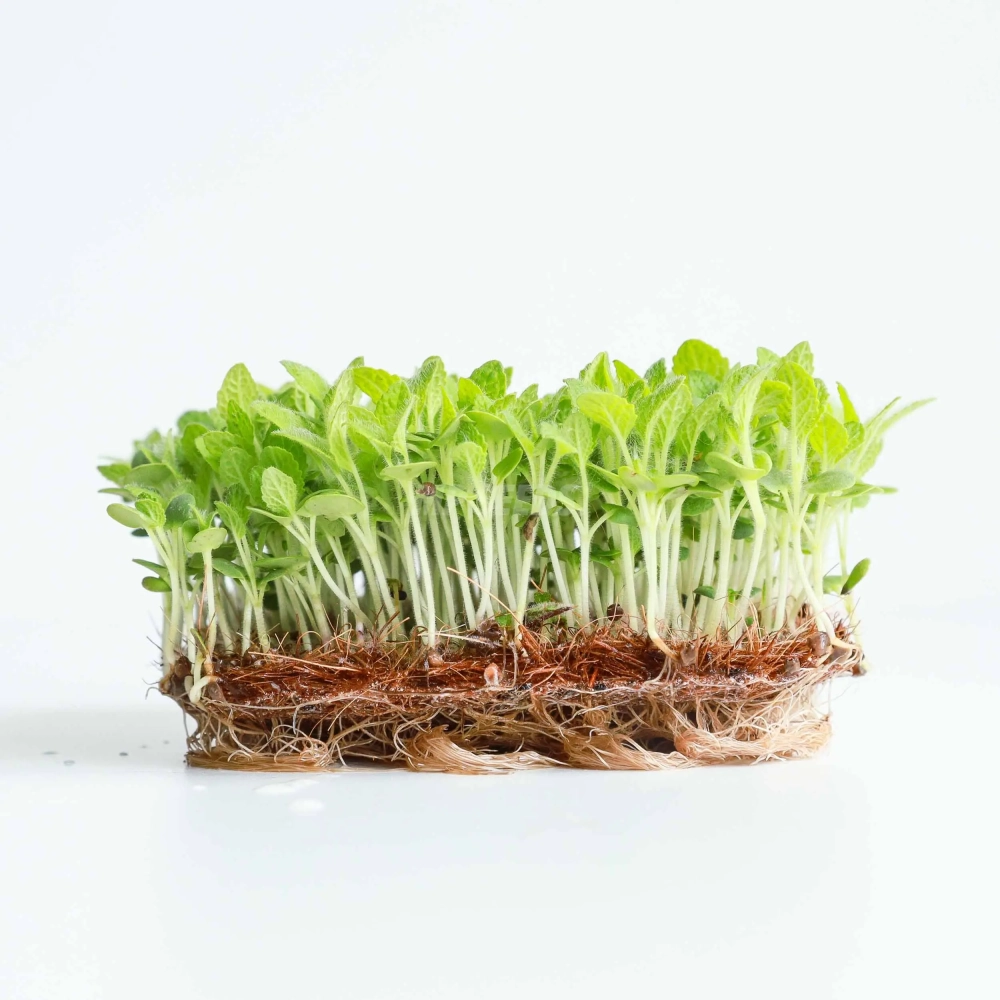
Salvia sclarea microgreens bring something special to your growing operation - beautiful fuzzy leaves, thick sturdy stems, and a pleasant herbal scent similar to melissa. These unique microgreens stand out from typical varieties like radish or pea, offering growers a premium product that restaurants and specialty retailers actively seek.
Originally called "herba sacra" (sacred herb) by ancient Romans, Salvia sclarea has a rich culinary history. Today's microgreen form captures that heritage while offering modern growers access to a functional food with concentrated nutrients and unique market positioning.
How to Grow Salvia Microgreens?
Growing Salvia microgreens requires attention to their unique mucilaginous seed characteristics but rewards growers with exceptional quality and visual appeal:
Growing Process:
- Sowing: Scatter seeds directly onto growing medium - DO NOT pre-soak due to mucilaginous properties
- Blackout Period: Keep in darkness for 3-4 days after sowing with weight stacking
- Light Exposure: Transition to indirect light or grow lights after blackout (minimum 10 hours daily)
- Harvest Time: Ready for harvest approximately 10 days after light exposure
- Total Growing Time: 14+ days from seed to harvest
Growing Requirements:
- Watering: Bottom watering recommended to prevent damping off disease
- Temperature: 21-24°C (70-75°F) optimal range
- Humidity: Maintain 40-60% relative humidity with good air circulation
- Light: Indirect sunlight or grow lights after blackout period
- Substrate: Well-draining growing medium (coconut coir, coconut or hemp mat recommended)
Read more about mucilaginous seed characteristics in our article: Jelly-Pouch Microgreens Seeds: Nature’s Clever Trick Explained
How to Use Salvia Microgreens?
Salvia microgreens offer versatile applications for premium culinary presentations:
Culinary Applications:
- Elegant Garnish: Beautiful fuzzy leaves provide sophisticated visual appeal for plated dishes
- Herb Substitute: Mild alternative to mature sage in delicate preparations and stuffings
- Gourmet Salads: Adds texture and subtle herbal notes without overpowering
- Premium Protein Pairing: Excellent complement to grilled salmon and goat cheese dishes
- Artisanal Pesto: Unique twist replacing basil for more complex, earthy flavor profile
Best Practices: Consume fresh to preserve the delicate texture and subtle fragrance. The mild, earthy flavor profile makes these microgreens suitable for dishes where visual impact is prioritized alongside gentle herbal notes.
What Are Nutritional Benefits of Salvia?
Based on research of mature Salvia sclarea, these microgreens likely concentrate beneficial compounds in significantly higher densities typical of microgreens:
Health Benefits:
- Antioxidant Properties: Rich in flavonoids and phenolic compounds that combat oxidative stress
- Anti-inflammatory Support: Natural bioactive compounds may support overall wellness
- Immune System Enhancement: Research indicates potential immune-supporting properties
| Variety | Clary Sage |
| Certification | Conventional Seeds |
| Seed Category | Microgreens Seeds |
| Latin Name | Salvia sclarea |
| Difficulty Level | Intermediate |
| Seed count per gram | 160 seeds |
| Sow density 10x20 tray | ~15g |
| Sprout in low temp. | - |
| Soaking | No - Mucilaginous seeds |
| Watering | Bottom watering preferred |
| Blackout Time | 3-4 days |
| Total growing time | 14+ days |
| Taste | Mild herbal, earthy with subtle sage notes |
| Stem Color | Thick, sturdy green-white |
| Leaves Color | Green with fuzzy texture |
| Nutrition benefits | Flavonoids, phenolic compounds, antioxidants |
FAQ about Salvia Microgreens
How long do clary sage microgreens take to grow?
Clary sage microgreens take 14+ days total growing time from seed to harvest. After 3-4 days blackout period, they need approximately 10 more days under light before optimal harvest.
Can you grow sage microgreens without soaking seeds?
You must grow sage microgreens without soaking. Salvia sclarea seeds are mucilaginous, forming gel coatings when wet that cause seeds to clump together and significantly increase risk of mold and damping off disease.
What do sage microgreens taste like?
Sage microgreens have a mild, earthy herbal flavor with subtle sage notes and gentle melissa-like fragrance. They're much milder than mature sage with beautiful fuzzy leaves and thick stems, making them perfect for delicate culinary applications.
How do you prevent damping off in sage microgreens?
Prevent damping off by using bottom watering exclusively, maintaining 40-60% humidity with good air circulation, ensuring proper temperature (21-24°C), and avoiding seed clumping through dry sowing. Use fans to maintain airflow and allow slight surface drying between waterings.
Are clary sage and regular sage microgreens the same?
No, clary sage microgreens (Salvia sclarea) differ from garden sage (Salvia officinalis). Clary sage has distinctive fuzzy leaves, thick stems, and historically was called "herba sacra" by Romans. It offers unique visual appeal and gentler flavor than garden sage varieties.
Why are sage microgreens more difficult to grow than other varieties?
Sage microgreens are intermediate difficulty due to their mucilaginous seeds requiring specific handling, slower growth rate compared to radish or pea shoots, higher susceptibility to damping off disease, and need for precise moisture management throughout the 14+ day growing cycle.