Just enter your tray dimensions and the calculator will provide precise seeding rates, soaking instructions, blackout days, and growing time.
Watercress Microgreens Seeds
Availability:
available
Dispatched within:
up to 2days
Price:
€65.91
including Polish VAT
Regular price:
The lowest price during 30 days prior to the reduction:
product unavailable
* - field mandatory
Product code:
WATERCRESS
 Description
General Information about Watercress Microgreens Seeds
Watercress microgreens seeds are a good choice for growers looking for a peppery, fresh and nutrient-focused microgreen. These watercress seeds grow into delicate greens with a bold flavour and a clean, elegant look.
This is true watercress, botanically known as Nasturtium officinale. It is different from garden cress, which is Lepidium sativum. This distinction is important because both crops can taste sharp, but they are different species and should not be grown or described in the same way.
Watercress microgreens are often chosen by health-conscious growers, chefs and microgreens farms. They are especially useful when you want to add a stronger, peppery taste and a nutrition-focused green to your offer.
Looking for classic garden cress? See our Cress Microgreens Seeds.
Taste & Appearance
Watercress microgreens have a bold, fresh and peppery taste. The flavour is slightly spicy and can remind you of mustard or radish microgreens.
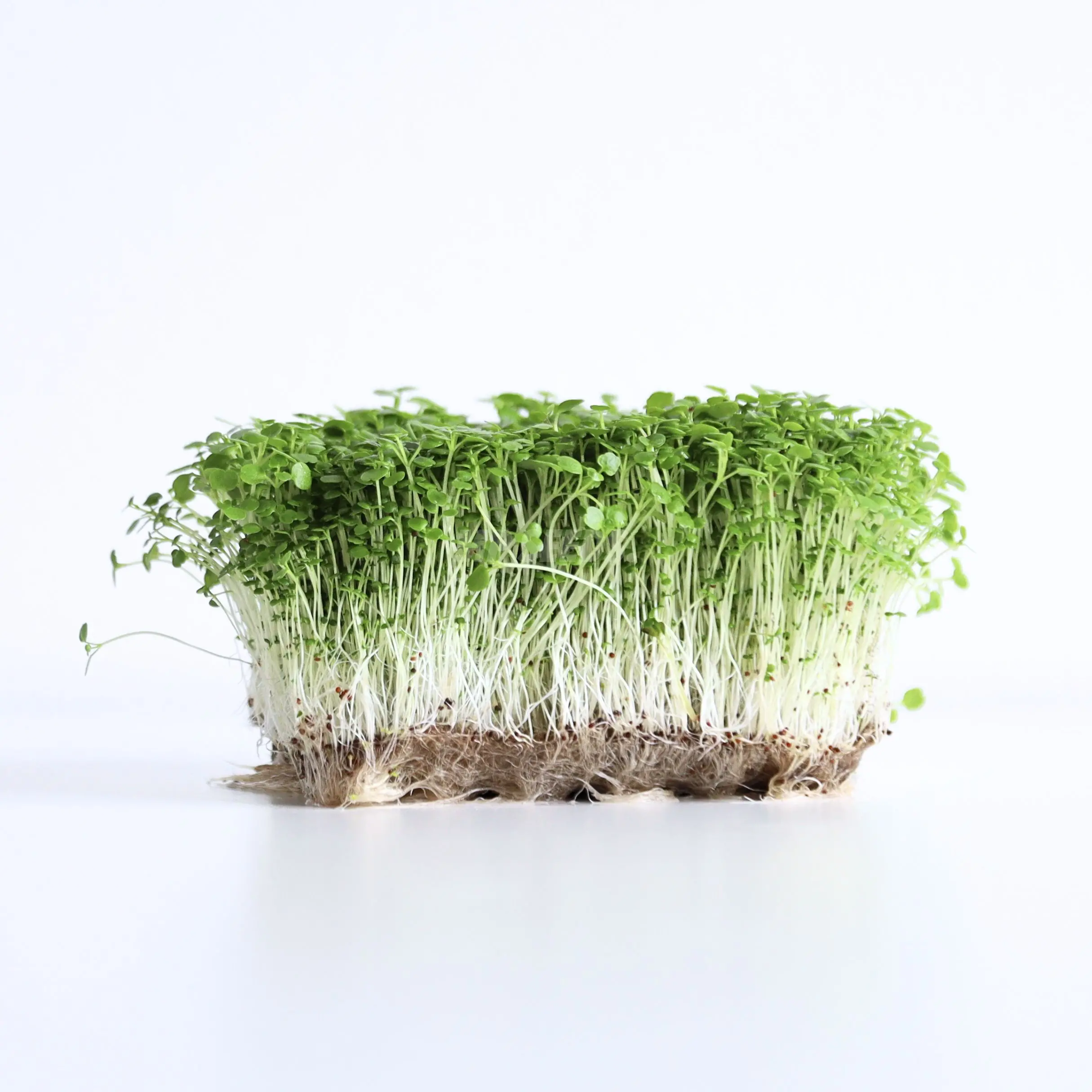
The plants produce pale green to green stems and glossy green leaves. Their fresh look makes them useful as a garnish, while their stronger taste makes them more than just decoration.
Compared with mature watercress leaves, watercress microgreens are more tender and delicate.
How to Grow Watercress Microgreens
Watercress seeds are small and delicate, so handle them carefully during sowing. Do not pre-soak them. Sow the dry watercress seeds directly onto a moist growing medium and mist them gently after sowing.
Keep the tray covered during the first stage and make sure the medium stays moist. Avoid strong spraying, because the seeds can move easily on the surface. Stable moisture is very important for this crop.
Germination usually takes around 7 days. After germination, move the tray to light and continue careful watering, preferably from the bottom. Do not let the medium dry out, but also avoid flooding the tray.
Watercress microgreens are usually ready to harvest in around 21–27 days, depending on temperature, light, moisture and the harvest stage you prefer.
For seed storage, keep watercress seeds in a cool, dry and dark place. For longer storage, refrigeration is recommended, but only in an airtight container. Let the closed package reach room temperature before opening to avoid moisture condensation.
How to Use Watercress Microgreens
Watercress microgreens are best used as a peppery finishing green. They add freshness, spice and a more premium look to simple and professional dishes.
They work well in salads, sandwiches, soups, egg dishes, seafood and sauces. They can also be used as a garnish for restaurant plates, tasting menus and catering dishes.
Because they are tender and delicate, it is best to add them raw or at the end of preparation.
Nutritional Benefits of Watercress
Watercress is known as a nutrient-dense cruciferous green. Watercress microgreens are often chosen for health-focused menus because they combine a strong peppery flavour with naturally occurring nutrients and plant compounds.
Watercress is naturally associated with vitamins such as A, C and K, as well as antioxidant-related plant compounds, including glucosinolates and isothiocyanates.
FAQ about Watercress Microgreens Seeds
Is watercress the same as garden cress?
No. Watercress is Nasturtium officinale, while garden cress is Lepidium sativum. They are different plants, even though both can have a sharp, peppery taste.
Do watercress seeds need soaking?
No. Watercress seeds should not be soaked. Sow them dry onto a moist growing medium and mist gently.
How should I store watercress seeds?
Watercress seeds are delicate, so store them in a cool, dry and dark place. For longer storage, keep them refrigerated in an airtight container and protect them from moisture.
| Variety: | Watercress |
| Certification: | Conventional Seeds |
| Seed Category: | Microgreens Seeds |
| Latin Name: | Nasturtium officinale |
| Difficulty Level: | Medium |
| Seed count per gram: | approx. 4,400 seeds |
| Sow density 10x20 tray: | 10–12 g |
| Sprout in low temp.: | Yes — prefers cooler growing conditions |
| Soaking: | No |
| Watering: | Frequent; keep the medium consistently moist; bottom watering recommended after germination |
| Blackout Time: | Until germination starts / around 7 days |
| Total growing time: | 21–27 days |
| Taste: | Bold, peppery, slightly spicy; mustard/radish-like |
| Stem Color: | Pale green to green |
| Leaves Color: | Glossy green; round cotyledons |
| Nutrition benefits: | Vitamins A, C, E, K; calcium, magnesium, iron; glucosinolates / isothiocyanates |