Just enter your tray dimensions and the calculator will provide precise seeding rates, soaking instructions, blackout days, and growing time.

Radish, Pink Microgreens seeds
Availability:
available
Dispatched within:
up to 2days
Price:
€4.00
including Polish VAT
Regular price:
The lowest price during 30 days prior to the reduction:
product unavailable
* - field mandatory
Product code:
RAD-PINK
 Description
General information about Radish Pink
Pink radish microgreens seeds produce crisp shoots with pink stems, green leaves and a peppery radish flavour. Radish Pink is an easy-to-grow variety of Raphanus sativus for adding colour and a spicy bite to salads, sandwiches and restaurant garnishes.
These pink radish seeds are conventional microgreens seeds. No soaking is required before sowing. For a 10 × 20 inch tray, the recommended starting density is 38 g, with approximately 75 seeds per gram. The growing instructions below cover the germination stage, light and temperature needed for this variety.
| Variety | Radish Pink |
|---|---|
| Certification | Conventional seeds |
| Seed Category | Microgreens seeds |
| Latin Name | Raphanus sativus |
| Difficulty Level | Easy |
| Seed count per gram | Approximately 75 seeds |
| Sow density 10x20 tray | 38 g per 10 × 20 inch tray |
| Sprout in low temp. | Yes; recommended germination temperature: 20°C |
| Soaking | Not required |
| Watering | Frequent checks; keep the growing medium moist without waterlogging |
| Blackout Time | 3 days |
| Total growing time | Approximately 9 days from sowing, depending on growing conditions |
| Taste | Peppery, with a spicy radish flavour |
| Stem Color | Pink, with possible red or purple tones |
| Leaves Color | Green |
| Nutrition benefits | Vitamin C, potassium, calcium and magnesium |
Taste and appearance of Radish Pink
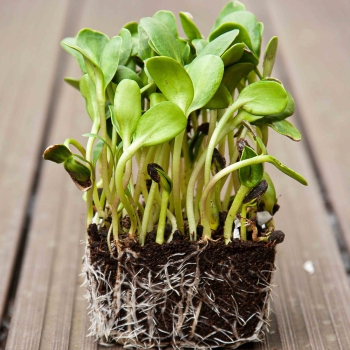
Pink radish microgreens have green, heart-shaped seed leaves above colourful stems. The stems can range from pink to red or purple tones, with colour intensity affected by the growing temperature. Cooler conditions encourage more saturated stems, while adequate light helps the leaves develop their green colour.
What do pink radish microgreens taste like?
Expect a fresh, peppery bite and a crisp texture. The flavour is distinctly radish-like, so a small handful can season a mild salad or balance creamy ingredients. Start with a small amount when using the shoots in a dish, then add more to suit your taste.
How to grow Radish Pink
Use peat-based growing medium, coco coir or coco mats. Radish Pink does not need pre-soaking, making it straightforward to sow directly into a prepared tray.
- Prepare and sow. Moisten the growing medium and distribute 38 g of seeds evenly across a 10 × 20 inch tray. Avoid piles of seeds so the shoots have room to develop.
- Germinate in blackout. Allow about 3 days at 20°C for the germination stage. Keep the medium moist and check the tray regularly.
- Move into the light. After the blackout stage, provide adequate light and aim for a growing temperature of around 16°C to encourage the pink stem colour.
- Manage moisture. Check frequently and water as needed without leaving the medium waterlogged. If growing on washed substrates, microgreens fertiliser can be used according to its instructions.
- Harvest the shoots. Allow approximately 9 days in total from sowing, including the blackout stage. The exact harvest date depends on the growing conditions. Cut the shoots above the growing medium when the leaves have opened and the crop is ready to use.
For more information about radish varieties and their uses, see why it is worth growing radish microgreens.
How to use Radish Pink
The combination of pink stems, green leaves and peppery flavour makes these shoots useful as both a garnish and an ingredient. Add them just before serving to retain their fresh appearance and crunch.
- Salads and grain bowls: combine with mixed leaves, tomatoes, cucumber and a light vinaigrette. The shoots also contrast well with mild cheeses and creamy dressings.
- Toast, sandwiches, wraps and burgers: add a handful for a fresh, spicy layer. Avocado toast is a simple way to pair the radish bite with a creamy base.
- Sushi, sashimi and spring rolls: use the shoots as a topping or filling for colour, texture and radish flavour.
- Eggs, soups and pizza: scatter over scrambled eggs, omelettes or poached eggs, and use as a finishing garnish for soup or pizza.
- Stir-fries: add towards the end of cooking if you want to keep some crispness.
- Smoothies and smoothie bowls: use a small amount if you enjoy a peppery note. Taste before adding more, as radish can dominate milder ingredients.
For a colourful plate, pair the shoots with slices of radish and edible flowers. Their appearance suits restaurant presentation, while the same combinations are easy to use in everyday meals.
What are the nutritional benefits of Radish Pink
Radish microgreens contain vitamin C and minerals including potassium, calcium and magnesium.
Radish Pink is a colourful way to add fresh greens to everyday meals. Its peppery flavour pairs well with creamy dressings, avocado and mild cheeses, making a small handful an easy addition to a varied diet.
FAQ about Radish Pink
Are these seeds for growing microgreens or mature radish roots?
These are radish seeds for microgreens, offered for growing young, leafy shoots. Follow the tray-growing instructions and harvest the shoots above the growing medium, rather than waiting for mature radish roots.
Do pink radish seeds need soaking?
No. Sow them directly onto a moist growing medium and follow the 3-day blackout stage before moving the tray into the light.
How long does Radish Pink take to grow?
The usual growing time is approximately 9 days from sowing, including about 3 days in blackout. Conditions can change the harvest date, so check the development of the shoots as well as the calendar.
Is Radish Pink the same product as Radish Rose or Red Rambo?
No. Radish Pink has pink stems and green leaves. Radish Rose is a separate variety with light pink stems, described as the spiciest radish in the MP SEEDS range. Radish Red Rambo has purple-red stems and leaves. Choose the variety according to the colour and flavour needed for your crop.