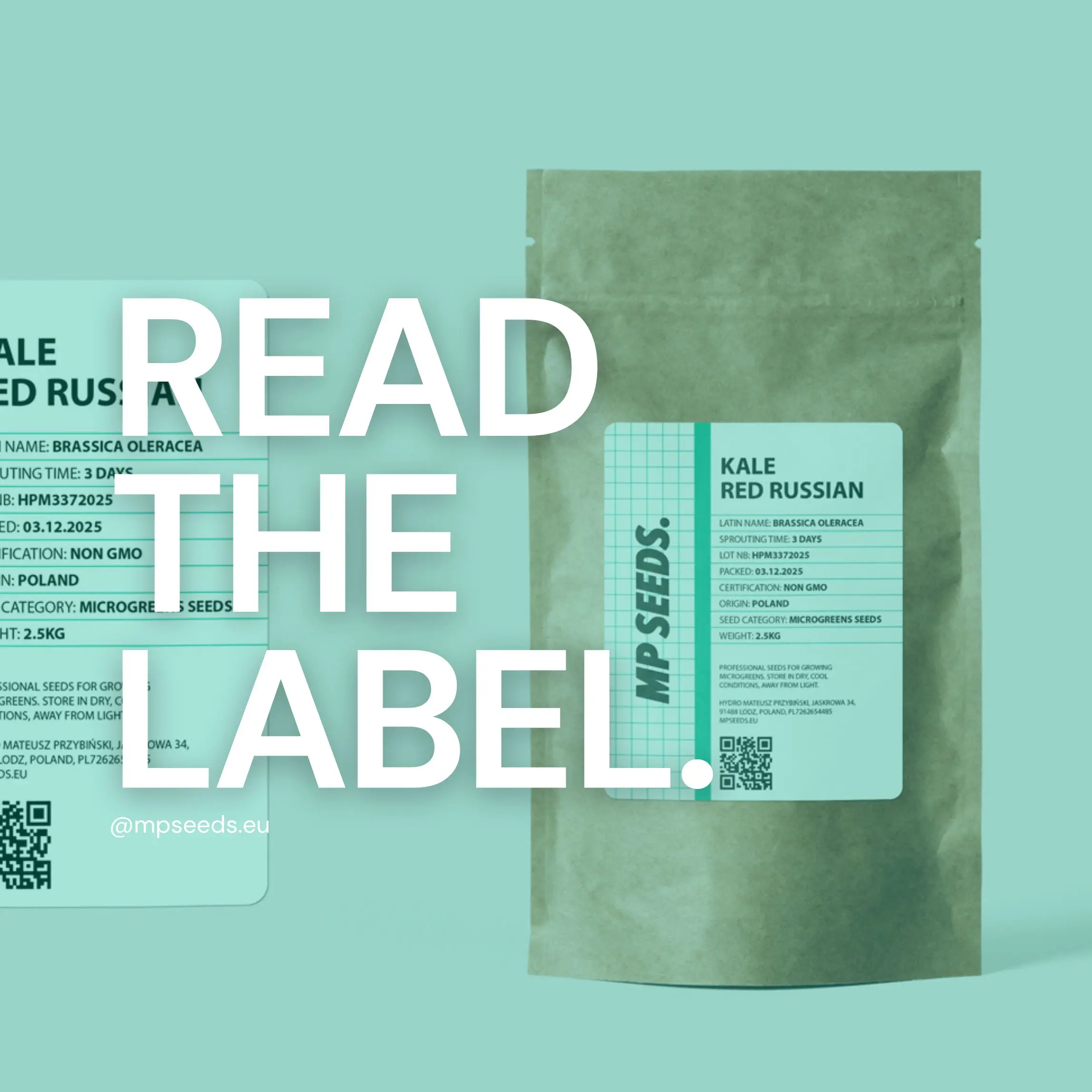
What Information Should Microgreens Seed Labels Include?
Your seeds may be inside the bag, but the label is what sells them. Whether you supply professional growers, urban farmers, or hobby customers, your label is the first point of contact. A microgreens seed label should do more than show the variety name. For growers, it is part of daily production: helping organize sowing schedules, track seed batches, manage storage, and maintain traceability.
Information like lot number, sprouting time, origin, certification, and plant passport details can make a real difference when managing multiple crops or solving germination issues. It builds trust, communicates quality, and often decides whether someone chooses your seeds over another supplier.
Let’s break down what makes a strong seed label and how different label types serve different customers.
Table of Contents:
- Why Are Seed Labels Important in Microgreens Production?
- What Should Every Microgreens Seed Label Include?
- Different Types of Microgreens Seed Labels
- What Is a Plant Passport on Seed Labels?
- Why Lot Numbers Matter for Microgreens Growers
- How Seed Labels Help in Daily Microgreens Production
- Common Seed Label Problems for Microgreens Growers
- Why Traceability Matters in Professional Microgreens Production
- Microgreens Seed Label Checklist
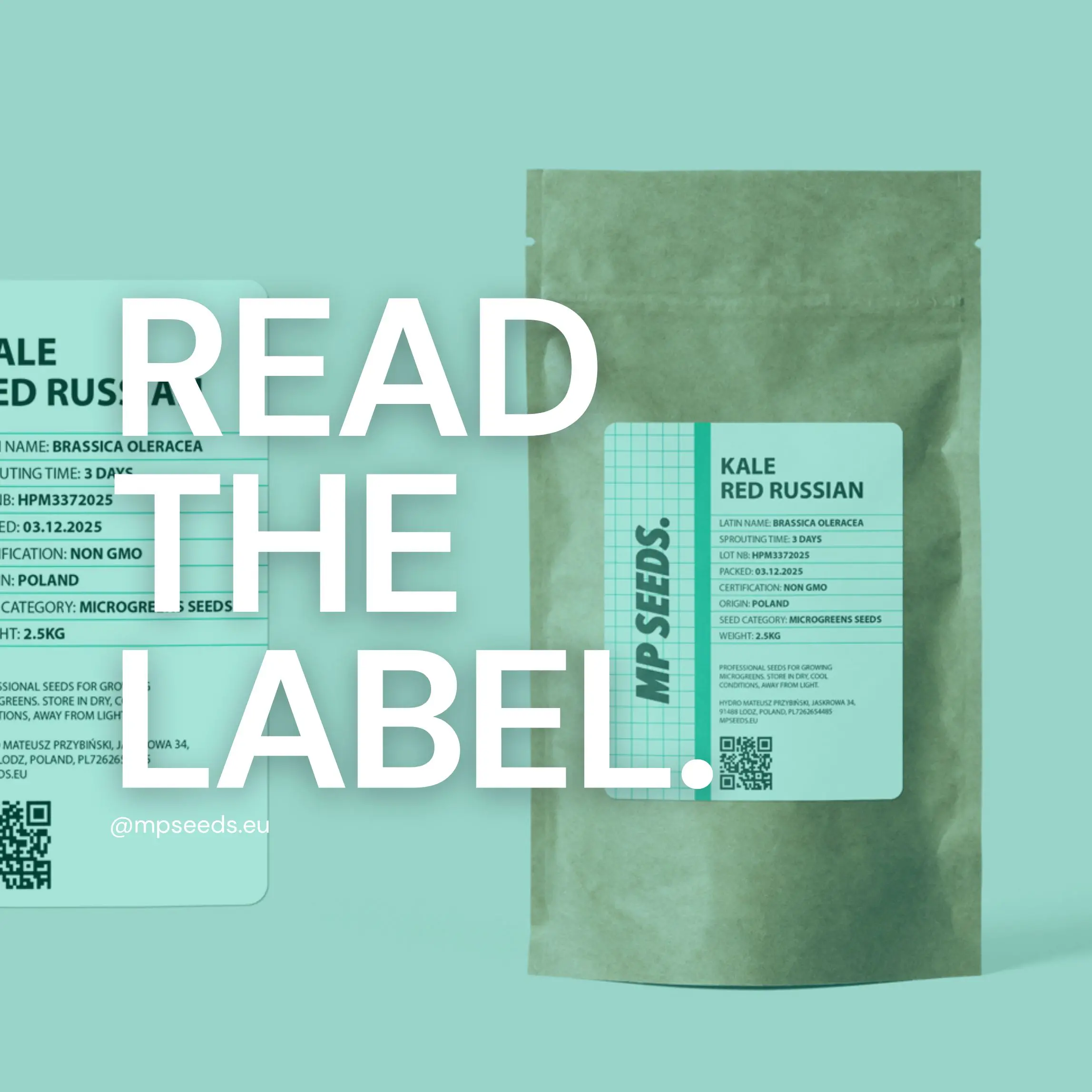
1. Why are seed labels important in microgreens production?
For microgreens growers, consistency and reliability are critical. A label is not just visual. It provides operational data. Without clear labels, growers managing multiple radish varieties can easily mix batches during sowing or harvest preparation.
A well-designed label helps:
- Identify the correct variety quickly
- Track batches and lot numbers
- Ensure compliance with EU regulations
- Reduce mistakes during sowing and storage
- Build trust with professional customers
For example, every MP SEEDS label includes key data like lot number, origin, and sprouting time, essential for repeatable production.
2. What should every microgreens seed label include?
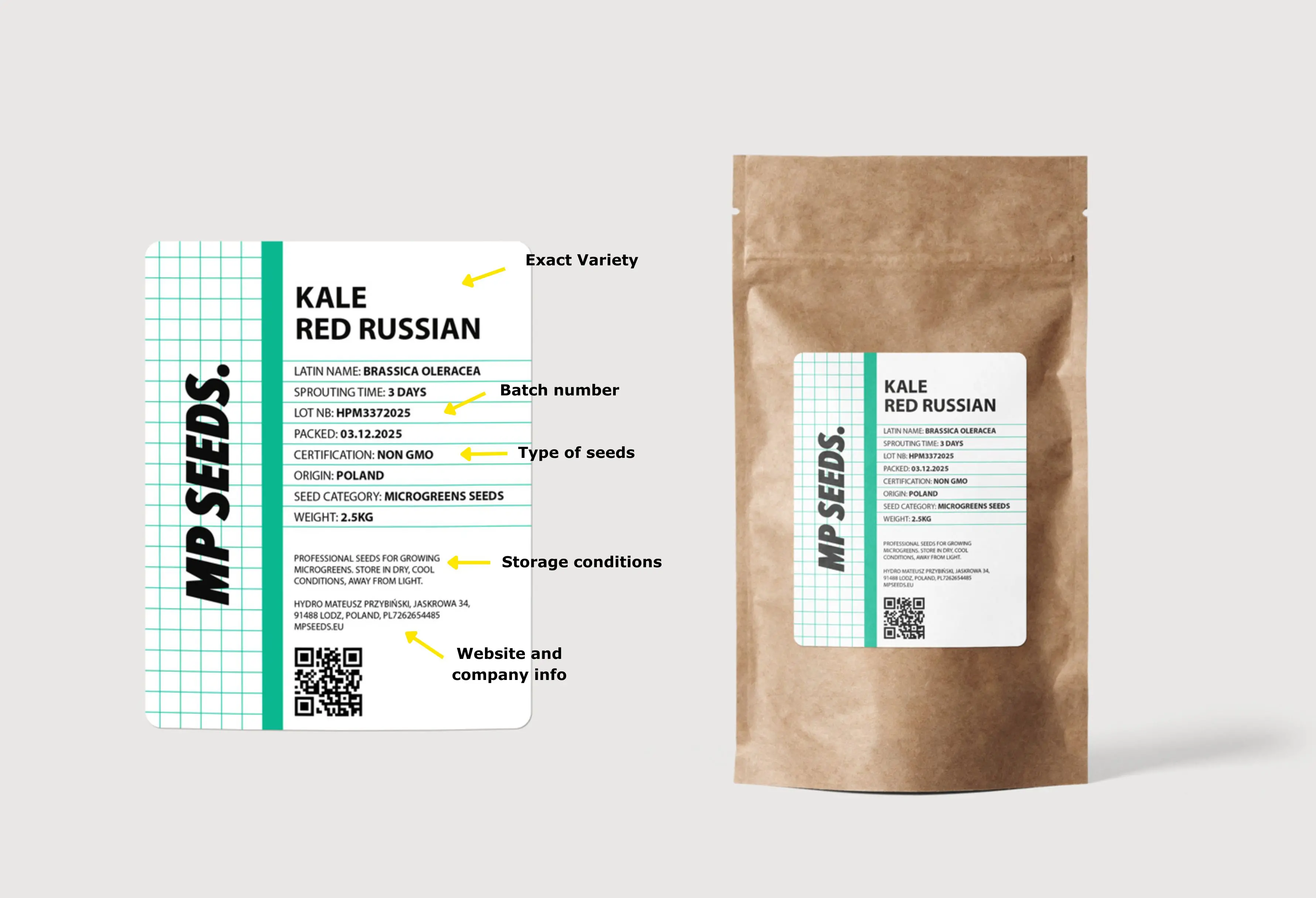
Regardless of design, there are non-negotiable elements every label should have.
Core information
- Variety name (clear and visible)
- Lot number (batch traceability)
- Packing date
- Origin
- Weight
Growing and storage info
- Sprouting time (critical for planning cycles)
- Storage instructions (dry, cool, away from light), it matter because seed viability depends heavily on proper storage conditions, especially in professional microgreens production.
- Intended use (microgreens production, sprouts etc.)
Producer identification
- Company name and address
- Website or contact point
| Label element |
Why it matters in professional microgreens production |
| Lot number |
Helps trace germination problems and identify specific seed batches. |
| Sprouting time |
Makes blackout and harvest scheduling easier. |
| Variety name |
Reduces the risk of mixing similar varieties during sowing. |
| Storage instructions |
Helps maintain seed viability during long-term storage. |
| Plant passport |
Supports EU traceability and professional distribution. |
| Organic certification |
Required for certified organic retail and B2B sales. |
3. Different types of microgreens seed labels
Instead of one universal format, MP SEEDS uses several label types depending on product category and use case.
1. Standard microgreens seed labels
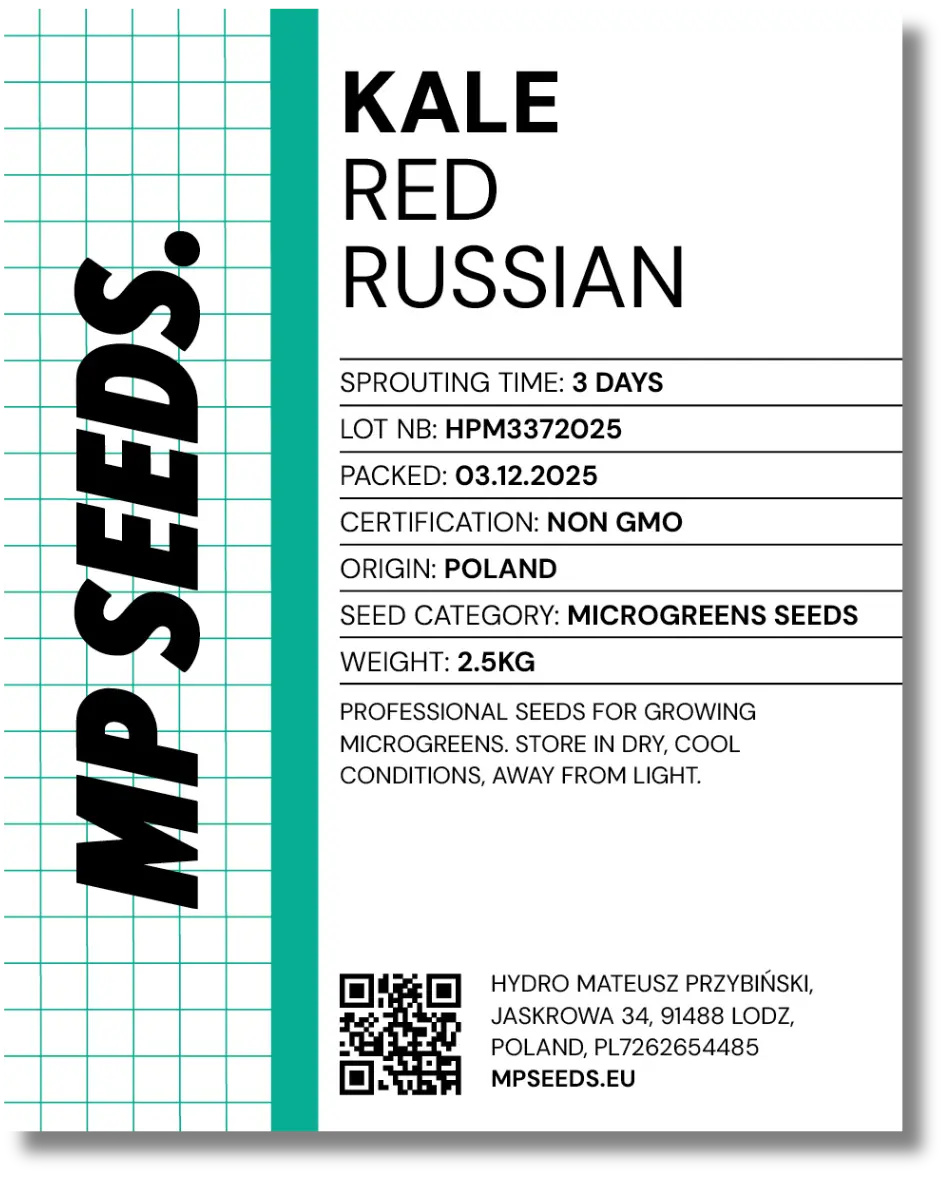
Used for most conventional seed batches.
Key features
- Clear variety name (e.g. Kale Red Russian)
- Sprouting time displayed prominently
- Lot number for traceability
- Certification (e.g. Non-GMO)
- Origin and seed category
Why it works
- Fast identification in storage
- Easy production planning
- Suitable for both beginners and professional growers
[product id="190, 193"]
2. Organic (BIO) seed labels
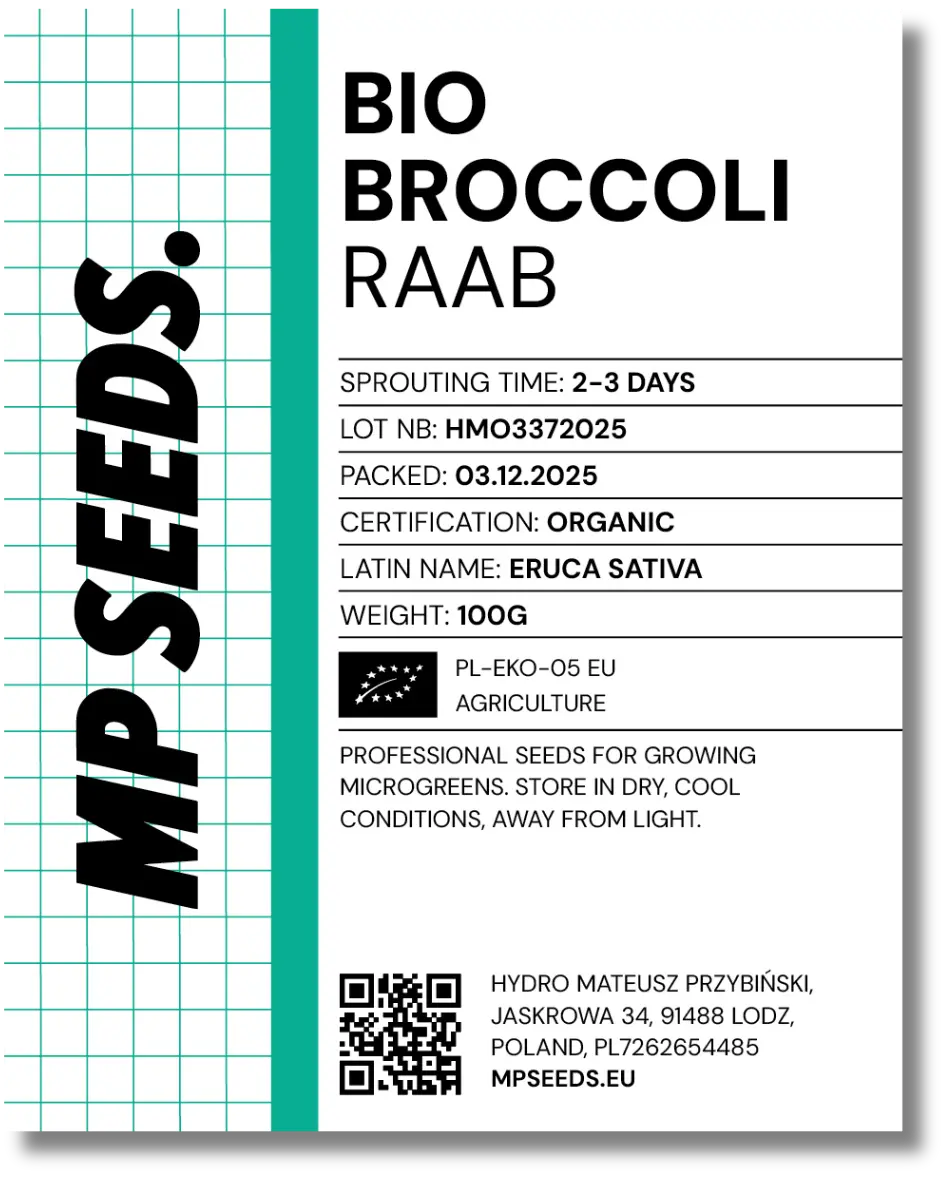
Used for certified organic seeds.
What changes
- Organic certification clearly marked
- EU organic identifier (e.g. PL-EKO-05)
- Latin plant name included
Why it matters
- Required for organic compliance
- Important for B2B customers and retailers
- Builds trust in premium segments
[product id="280, 299"]
3. Seed labels with plant passport
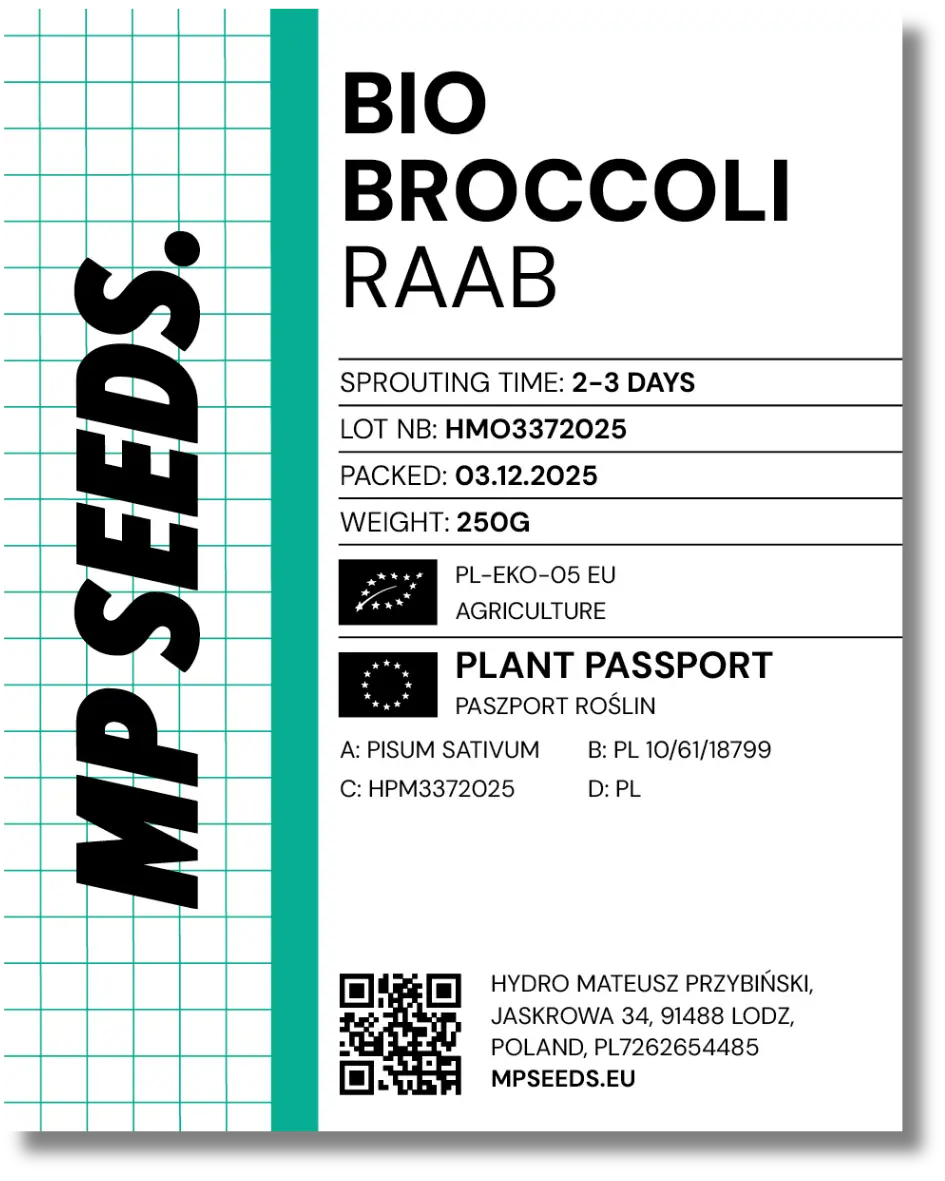
Used when regulatory traceability is required (especially in EU distribution).
Additional elements
- Plant passport section
- Botanical identification
- Country code and registration number
Why it matters
- Mandatory for certain distribution channels
- Required for professional resale and logistics
- Ensures full traceability across the supply chain
[product id="264, 265"]
4. What Is a Plant Passport on Seed Labels?
A plant passport is an EU traceability system used to identify and track seeds and plants through the supply chain. It is especially important in professional distribution, logistics, and commercial growing.
A plant passport label may include:
- botanical species name,
- country of origin,
- registration number,
- supplier identification,
- lot number.
For microgreens growers and seed suppliers, plant passports help maintain traceability, simplify quality control, and support compliance within the EU market.
At MP SEEDS, plant passport labels are used on selected products where regulatory traceability is required.
5. Why Lot Numbers Matter for Microgreens Growers
A lot number identifies a specific seed batch. In professional microgreens production, it helps growers track germination consistency, manage storage, organize sowing cycles, and solve quality issues faster.
If problems like poor germination, uneven growth, or customer complaints appear, the lot number allows both growers and suppliers to trace the exact batch used during production.
Lot numbers are especially important for growers managing:
- multiple varieties,
- frequent deliveries,
- large-scale sowing,
- restaurant or retail supply.
6. How Seed Labels Help in Daily Microgreens Production
A well-designed label makes your daily work faster and less error-prone.
In the grow room When you're managing multiple trays at once, a clear label means you grab the right seeds first time. Variety name, sprouting time, and lot number visible at a glance, no second-guessing, no mixing up Radish Pink with Radish Rambo mid-sowing.
In storage Seeds stored in bulk look alike. A structured label lets you organize varieties consistently and find what you need quickly during packing, especially important when you're running tight harvest windows.
When you start scaling As your operation grows, good labeling becomes infrastructure. Lot numbers let you trace any quality issue back to its source. Sprouting times help you plan cycles without relying on memory. And when you bring on staff, the label does part of the training for you.
[product id="239, 249"]
7. Common Seed Label Problems for Microgreens Growers
Poor labeling isn't just a supplier problem. If the label on your seed bag is missing key information, it slows down your operation and creates real risk, whether you're growing microgreens or sprouts.
Mistake 1: No lot number on the bag If something goes wrong: poor germination, unusual growth, quality complaint from a customer, a lot number is the only way to trace it back to the source. No lot number means no accountability, on either side.
Fix: Always check for a lot number before buying. Keep a record of which lot went into which tray or jar → Everything you want to know about seed batches
Mistake 2: Vague variety names "Microgreens mix" or just "radish" tells you almost nothing in production. You need the exact variety to plan correctly, reorder consistently, and maintain quality for your customers.
Fix: Look for precise naming: Radish Red Rambo, Pea Salad, Kale Red Russian, Mung Bean. If it's not on the label, ask before you order.
Mistake 3: No sprouting time listed Germination and sprouting time varies between species and varieties. Without it on the label, you're guessing or looking it up every time, unnecessary friction in daily planning, especially when managing multiple crops at once.
Fix: Choose suppliers who include expected germination or sprouting time clearly on the label.
Mistake 4: Missing or vague storage instructions Seeds stored in wrong conditions lose viability faster than most growers expect. For sprouts especially, where seed quality directly affects food safety, no storage guidance is a serious red flag.
Fix: The label should clearly state: dry, cool, away from light. If it doesn't, take note.
Incorrect storage conditions may reduce seed quality and increase the risk of cultivation problems, including mold development during germination.
8. Why Traceability Matters in Professional Microgreens Production
For professional buyers, a seed label is not decoration. It is proof that the supplier takes quality seriously, and that proof matters to you too.
When you can show your customers, restaurants, distributors, or retail buyers, that your production is traceable and consistent, a clear seed label is part of that story. It tells you, and anyone auditing your process, that:
- the batch is identified and trackable
- the seeds meet documented standards
- the supplier understands production requirements
For microgreens and sprouts growers supplying food businesses, this kind of traceability is increasingly expected, and sometimes required.
[product id="215, 217"]
9. Microgreens Seed Label Checklist
Use this quick audit:
- Clear variety name
- Visible sprouting time
- Lot number for batch traceability
- Origin and certification information
- Storage instructions
- Label readable during daily production work
A seed label is part of the production system, not just packaging. For microgreens and sprouts growers, clear labeling improves traceability, simplifies production planning, and reduces mistakes during daily operations.
The right label helps organize sowing schedules, manage seed batches, maintain storage consistency, and solve quality issues faster when they appear. As production scales, good labeling becomes an important part of efficient and repeatable microgreens growing.



 Menu
Menu