Why do microgreens have different colors?
Have you ever wondered why microgreens burst with such a surprising variety of colors — from deep burgundy and vibrant green to bright fuchsia stems and even hints of purple? While size, shape, and flavor often take the spotlight, microgreens color is far from random. In fact, the pigments they develop are not just beautiful — they carry meaning, purpose, and a story of survival and nutrition. Let’s uncover why microgreens don’t all look the same and what their color variation can tell you.
Table of Contents:
- What determines microgreens color?
- Genetics: The root of color variation in microgreens
- How light affects microgreens pigmentation
- Why do some microgreens turn red?
- Microgreens with purple stems: What’s the deal?
- Beyond beauty: Does microgreens color affect nutrition?
- Elevate your growing with MP SEEDS’ premium varieties
- See microgreens differently and grow with color in mind
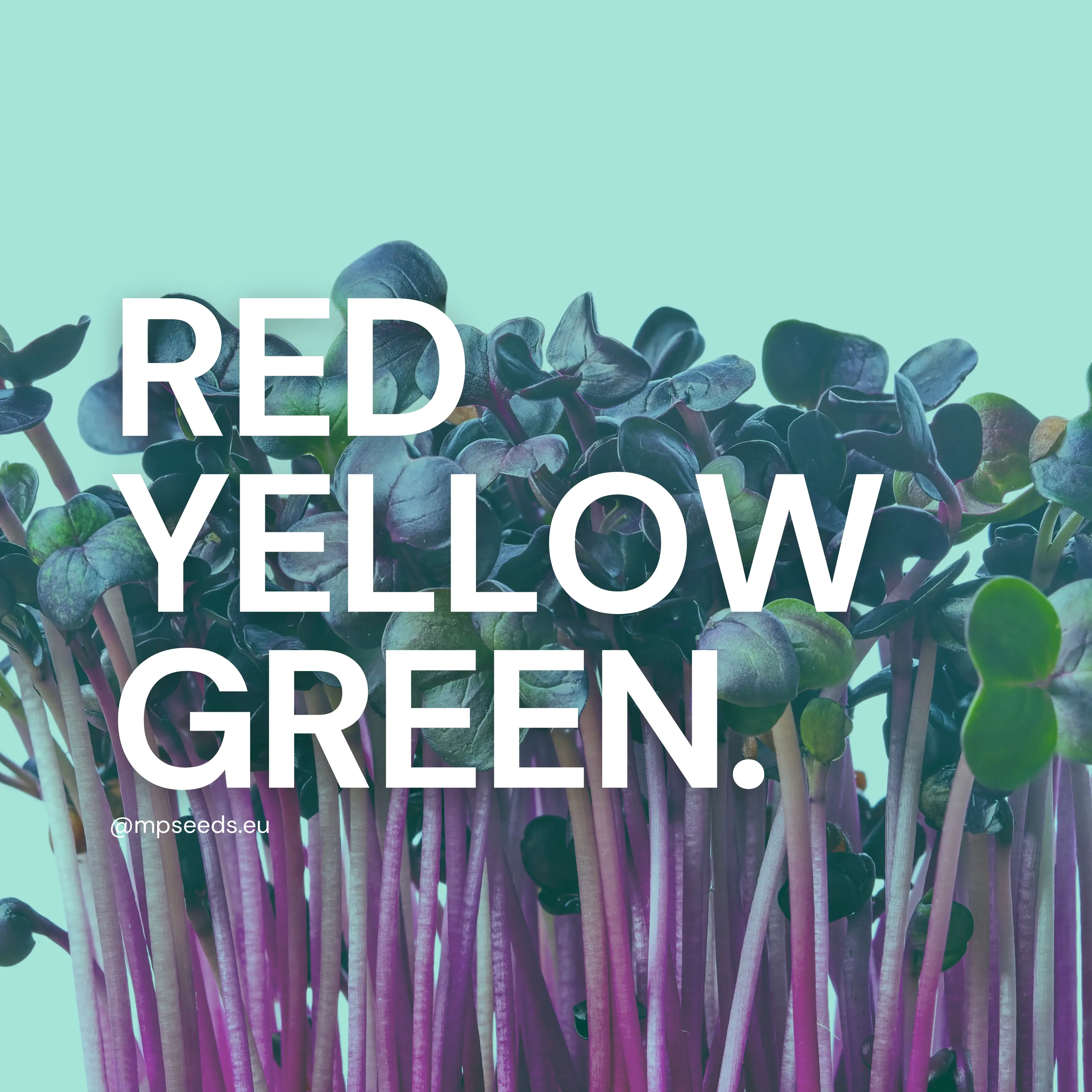
What determines microgreens color?
Before diving into red microgreens or those with purple stems, it’s worth understanding the science behind what gives any plant its color. Microgreens pigmentation is the result of specific compounds in the plant’s tissues, including:
-
Chlorophyll – gives green microgreens their vibrant hue,
-
Anthocyanins – responsible for purple, red, and blue tones,
-
Carotenoids – contribute yellow, orange, and golden colors.
These natural pigments are influenced by both genetics and environmental factors. That’s why two trays of the same variety might not always look identical.
Genetics: The root of color variation in microgreens
Each type of microgreen has a unique genetic profile that determines its pigment potential. For example, red amaranth will naturally produce intensely colored microgreens, while sunflower microgreens tend to remain bright green. Different species and even specific cultivars within a species are bred for color, flavor, or growth characteristics. Colored microgreens are often chosen for their bold appearance, especially by chefs and home cooks looking to enhance plating.
Some of the most visually striking varieties include:
-
Red cabbage – intense purple with pale green highlights.
-
Red kohlrabi – dark stems and veins.
-
Beetroot – deep red microgreens with earthy flavor.
-
Radish – often showing pink or purple stems with green tops.
This inherent variety makes microgreens not only nutritious but also visually appealing — adding both taste and style to any dish.
[product id="22, 24"]
How light affects microgreens pigmentation
Light is one of the most important external factors that influence pigmentation. Microgreens grown under specific light spectrums can exhibit stronger or different hues. For example:
-
Red or blue LED lights often increase anthocyanin production, intensifying red and purple colors.
-
Low light or too much shade can cause microgreens to grow pale and leggy.
-
Sunlight can enhance chlorophyll, making green microgreens more vibrant.
Interestingly, this also explains why some microgreens with purple stems become even more colorful when exposed to cooler temperatures or UV light. It’s a natural survival response — these pigments protect the plant from stress, pests, and excessive light.
Why do some microgreens turn red?
If you've ever noticed your microgreens unexpectedly turning red, it’s not necessarily a bad sign. In fact, red coloration in certain species can indicate:
-
Cold stress – anthocyanins build up to protect young plants.
-
Light exposure – intense lighting, especially during early growth, can trigger pigmentation.
-
Natural genetics – some microgreens are simply meant to be red, especially beet or red cabbage.
This red hue often appears in the stems or undersides of leaves. It's a visual cue that your microgreens are reacting to their environment — much like autumn leaves changing color.
Microgreens with purple stems: What’s the deal?
Purple-stemmed microgreens are among the most eye-catching on the market. They’re not just pretty — they’re often rich in antioxidants. These include: Kohlrabi red, radish Red Rambo, Red cabbage, Basil red opal. Their coloration results primarily from anthocyanins, which not only add visual appeal of microgreens, but may also support health thanks to their anti-inflammatory properties. This visual diversity turns a simple salad into a gourmet experience. No extra effort required.
[product id="2, 86"]
Beyond beauty: Does microgreens color affect nutrition?
Yes, it often does. Pigments such as anthocyanins and carotenoids are bioactive compounds, which means they may offer health benefits. For example:
[product id="293, 297"]
-
Green microgreens high in chlorophyll may help detoxify the body.
-
Red and purple microgreens tend to have more antioxidants.
-
Some green varieties, such as nasturtium and marigold, contain carotenoids like lutein and beta-carotene, though their color is often masked by chlorophyll.
So, color variation in microgreens isn't just cosmetic. It’s a visual signal that reflects underlying nutritional diversity — one more reason to mix colors on your plate.
Elevate your growing with MP SEEDS’ premium varieties
[product id="265, 292"]
If you're a chef, home grower, or commercial producer looking to expand your palette — both visual and culinary — MP SEEDS offers a curated selection of microgreens seeds bred for vivid pigmentation, reliable germination, and rich flavor. As a family-owned company based in Poland, we specialize in high-quality seeds for microgreens, micro-herbs, and edible leaves. Our varieties are trusted by growers across Europe and beyond, who count on us for consistency, freshness, and support at every stage of their cultivation journey. All seeds are selected for optimal growth, tested for germination, and delivered quickly, because great results start with great seeds.
📚 Explore Colorful Microgreens at MP SEEDS!
See microgreens differently and grow with color in mind
Understanding why microgreens have different colors opens up a new appreciation for these tiny plants. Their pigments don’t just please the eye — they reflect a mix of genetics, environment, and nutrition that makes every tray unique. From the deep purples of red cabbage to the fresh greens of pea shoots, color defines the visual and sensory value of microgreens. By choosing high-quality, pigment-rich varieties, you gain more intense flavor, stronger coloration, and a harvest that stands out on the plate and in the market. Expand your offer with colorful microgreens that add premium visual appeal to your production. With MP SEEDS, building a diverse, eye-catching microgreens selection is simple, consistent and reliable.



 Menu
Menu