
Best Microgreens for Beginners
If you’ve ever thought about growing your own food but didn’t know where to begin, microgreens are your best start. They grow fast, take little space, and reward you with real results in days, not weeks. Let’s look at the easiest varieties that will make your first harvest a success.
Table of Contents:
- Why Microgreens Are Perfect for Beginners
- Top Microgreens to Start Growing
- Simple Tips for Your First Grow
- Your First Green Success 🌿
- Frequently Asked Questions (FAQ)
1. Why Microgreens Are Perfect for Beginners
What Are Microgreens Exactly?
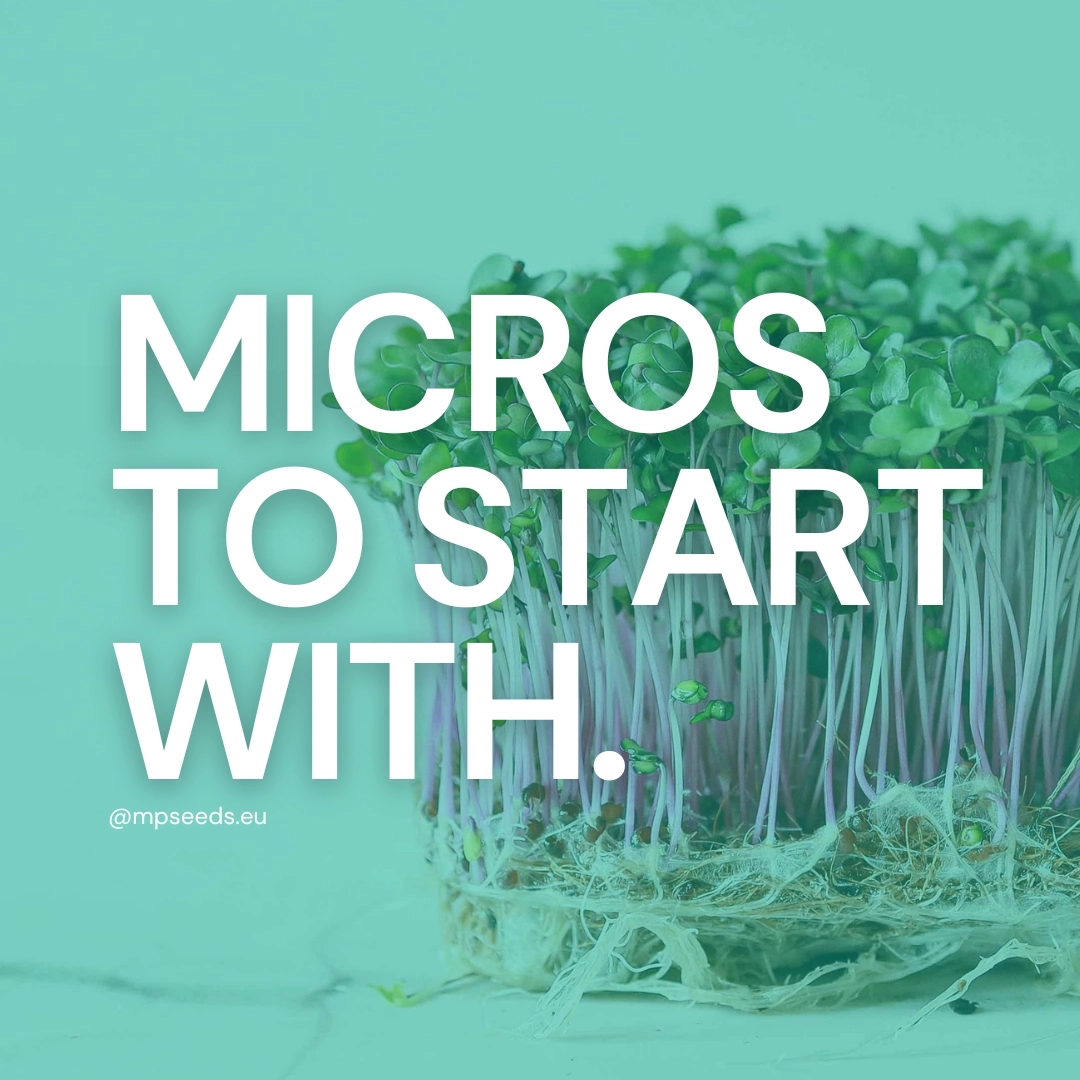
Microgreens are young vegetable or herb plants harvested just after they’ve developed their first true leaves. Despite their size, they deliver intense flavour, vibrant colour, and more nutrients than mature greens. You can grow them from seeds of popular crops like radish, broccoli, arugula, mustard, or peas, and they’re ready to eat in just over a week.
[product id="2, 96"]
Unlike sprouts, which grow in water and are eaten whole (including roots), microgreens develop in a thin layer of soil or on natural mats such as coconut fibre. They’re cut just above the base: clean, crisp, and full of aroma. That makes them not only safer to eat, but also more versatile in the kitchen: a handful can transform any sandwich, salad, or smoothie into something fresh and vibrant.
Why They’re Great for Starters

There’s truly no easier crop to begin with. Microgreens grow fast: many varieties are ready to harvest in 7 to 10 days, some even sooner. You don’t need a garden or expensive tools; a simple tray, clean water, and good seeds will do the job.
Even a sunny kitchen windowsill can become your first mini indoor garden. They don’t take much space, they don’t create a mess, and they grow visibly every single day. That quick progress gives a strong sense of achievement: something beginners need most at the start.
What makes microgreens especially rewarding is their low risk and high return. If one tray doesn’t go perfectly, you can simply try again a few days later, no lost season, no waiting for weather, no frustration. And once you see that bright green carpet of your first successful tray, it’s hard not to get hooked.
Microgreens teach the basics of growing: patience, observation, and timing, without the stress or complexity of traditional gardening. They’re more than just plants: they’re a small, daily reminder that with a bit of care and light, good things grow fast. 🌱
2. Top Microgreens to Start Growing
Not all microgreens behave the same. Some grow faster, some are more delicate, and a few can surprise you with their colours and flavours. If you are new to growing, start with the varieties that are reliable, forgiving, and quick to harvest. These are our tried-and-tested favourites at MP SEEDS.
Radish Microgreens (Daikon, Rose, Rambo)
[product id="46, 48"]
Radish microgreens are one of the fastest and most satisfying crops for beginners. They germinate in just one to two days and are ready to cut in less than a week. The strong, spicy flavour and deep colours make them popular in both home kitchens and professional farms. They grow evenly and tolerate small mistakes in watering or lighting.
💡 Best choice if you want quick results and a bold flavour.
Broccoli Microgreens (Calabrese)
[product id="14, 96"]
Broccoli is a classic beginner microgreen. It grows evenly, has a mild taste, and delivers an impressive amount of nutrients, including vitamin C, K, and sulforaphane. It performs well in most conditions and doesn’t need much light. Broccoli is also one of the cleanest varieties to harvest, which makes it great for your first trays.
💡 Perfect if you want something gentle in flavour and rich in nutrients.
Arugula (Rocket)
[product id="124, 234"]
If you like a peppery taste, arugula microgreens will quickly become your favourite. They germinate fast and have a strong, fresh aroma. Arugula grows best in moderate humidity and gives you dense, green leaves within ten to twelve days. It’s often the moment when beginners realise that small greens can carry big flavour.
💡 Great if you enjoy a bit of spice in your dishes.
Pea Shoots (Dunn, White)
[product id="219, 289"]
Pea shoots are easy, productive, and a joy to grow. Their thick stems and large leaves create a full, bushy look that feels rewarding to harvest. Peas prefer slightly cooler temperatures and can even regrow after cutting. They add a sweet, crisp texture to any salad or stir-fry.
💡 Ideal if you want a big harvest and crunchy greens.
Read more on how to grow pea microgreens in our another article: 📚How to grow pea microgreens fast and easy?
Cabbage (Red Acre)
[product id="20, 22"]
Red cabbage microgreens stand out with their purple stems and soft green tops. They germinate quickly and grow well even with limited light. The flavour is mild and slightly sweet, which makes them a great addition to sandwiches and wraps. They also look beautiful in mixes, adding colour and balance to your trays.
💡 Perfect if you want a colourful, low-maintenance crop.
Mustard (Red Giant)
[product id="8, 254"]
For those who like a bit of heat, mustard microgreens are a fun and flavourful option. They grow fast, stay uniform, and have a beautiful red-green tone. The taste is spicy but clean, perfect for experimenting with blends or as a visual accent on plates.
💡 Choose this variety if you want to play with colour and taste.
[product id="20, 126"]
If you want to try several varieties at once, start with a ready-made beginner mix. These blends are designed to grow evenly and offer a range of colours, shapes, and flavours. It’s an easy way to discover what you like most and learn how different seeds behave.
💡 Best for anyone who wants variety and guaranteed success.
3. Simple Tips for Your First Grow
The first step to success is always the same, choose good seeds. Certified and tested microgreen seeds give you even germination, no mold, and a strong, healthy crop. Always check the germination rate on the label and store your seeds in a cool, dry place. Clean seeds mean fewer problems and faster results.
Choose a Comfortable Growing Medium
[product id="142, 272"]
Your substrate can make growing easy or frustrating. Many beginners start with coconut mats or coco coir, because they’re clean, simple, and don’t leave any mess. If you prefer a richer texture and deeper flavour, go for soil or organic microgreens mix. The key is moisture balance, the surface should stay damp, not wet. Use a spray bottle to mist the surface evenly.
Read our another article to understand all benefits of using Coco mats: 📚Cocomats: The Secret Ingredient for Successful Microgreens Growth
Light and Air Make All the Difference
Once your seeds germinate, give them light as soon as the first leaves appear. A bright windowsill is often enough, but if you’re growing in a darker spot, add a small LED grow light. Keep it close but not too close, about 20 centimetres above the tray.
Fresh air is equally important. Open a window for a few minutes daily or use a small fan. Airflow prevents fungus and helps your greens stay upright and strong.
Harvest at the Right Moment
Most microgreens are ready to harvest in 7 to 10 days. Cut them when the first true leaves appear and the plants look tall and full of life. Use clean scissors or a knife and trim just above the substrate. Harvest in the morning, when the plants are crisp and full of water. Rinse gently, dry on paper towel, and store in the fridge, they’ll stay fresh for several days.
Learn, Adjust, and Enjoy the Process
Every variety grows differently. Radish likes cooler air, basil prefers warmth, peas enjoy a little shade. Keep a small notebook and jot down what works best for you. Growing microgreens is all about learning by doing, the more trays you try, the better you understand them. And the best part? Even if something goes wrong, you can try again the same week.
Microgreens are patient teachers. With a bit of light, clean seeds, and attention, they reward you faster than any other plant. Your first tray is more than a test, it’s the start of something green and growing. 🌱
4. Your First Green Success 🌿
Your first tray of microgreens will always feel special. In just a few days, dry seeds turn into a bright, living harvest, and that’s when you realise how simple growing can be.
Each variety behaves a little differently, and that’s part of the fun. Some grow faster, some slower, some surprise you with colour or flavour. The key is to observe, adjust, and enjoy the process.
Microgreens grow fast, but what they really cultivate is patience. You learn to notice small changes, to water carefully, to celebrate progress. And that’s the real reward, the feeling of growing something green and alive with your own hands. 🌱
5. Frequently Asked Questions (FAQ)
What are the easiest microgreens to grow for beginners?
Radish, broccoli, and pea shoots are the most reliable choices. They germinate fast, grow evenly, and don’t need much attention.
How long do microgreens take to grow?
Most varieties are ready in 7 to 10 days. Some, like basil or amaranth, take a bit longer, but most give you visible progress within the first week.
Do I need special equipment to grow microgreens?
No. A tray, clean seeds, water, and light are enough. You can start right on your windowsill.
Can I grow microgreens without soil?
Yes. Coconut mats or coco coir work perfectly. They’re clean, reusable, and ideal for small spaces.
Why are my microgreens not growing evenly?
It usually means uneven watering or too dense sowing. Spread the seeds lightly and mist the surface instead of pouring water.
Are microgreens safe to eat raw?
Absolutely, as long as you use certified, clean seeds and keep your tools and trays hygienic.



 Menu
Menu