


Just enter your tray dimensions and the calculator will provide precise seeding rates, soaking instructions, blackout days, and growing time.
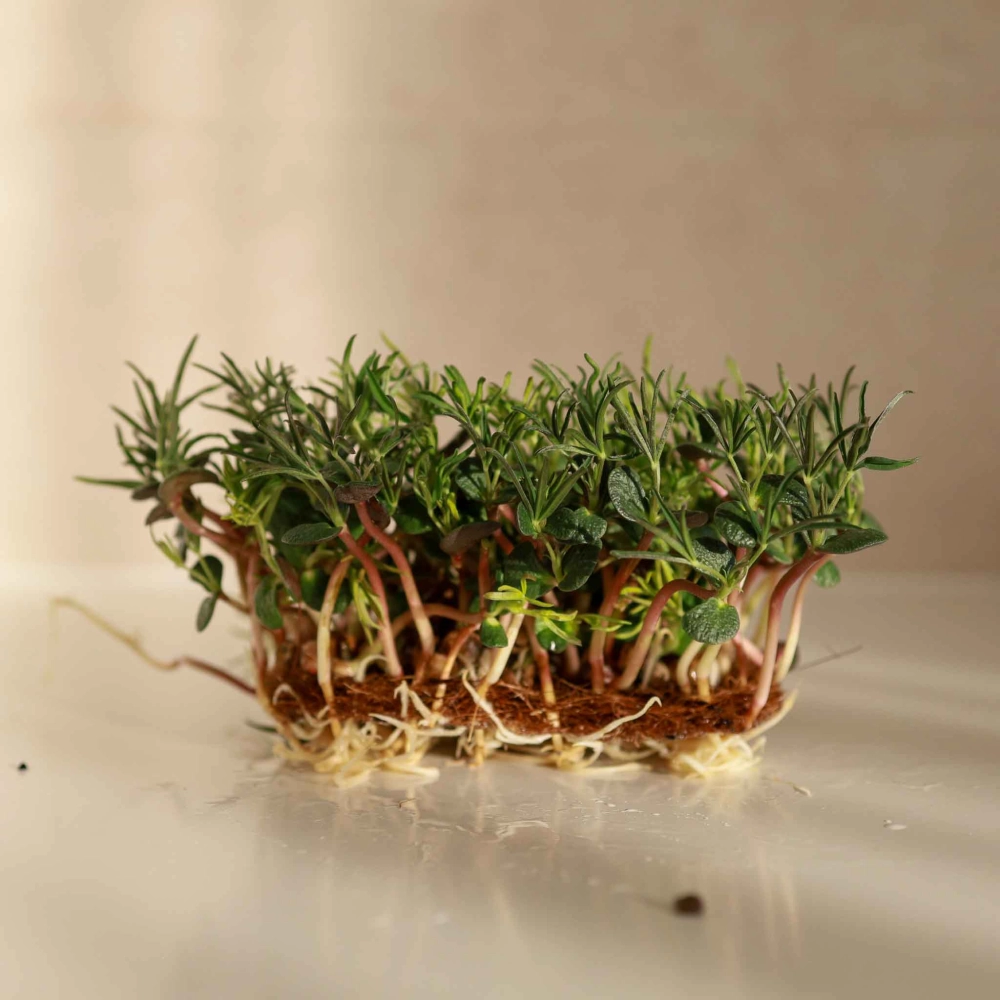
Lupine Microgreens Seeds
Availability:
available
Dispatched within:
up to 2days
Price:
€1.00
including Polish VAT
Regular price:
The lowest price during 30 days prior to the reduction:
product unavailable
* - field mandatory
Product code:
LUPINE
 Description
General information about Lupine
Lupine microgreens seeds grow into distinctive greens with a crisp bite, a mild nutty flavour and an umami note. Their stems range from light green to rose, while the green leaves bring an unusual shape to salads, bowls and finished plates. Choose Lupine when you want a garnish with both texture and visual character.
These conventional seeds are offered for growing young microgreens. Dark seeds are supplied as standard. Light-coloured seeds are also available on request: add a note at checkout or contact MP SEEDS before ordering if you prefer that option.
The name also appears as lupin microgreens in English. This offer is for growing young greens in trays. The recommended sowing rate is 230 g per 10 × 20-inch tray, with approximately 4 seeds per gram.
| Variety | Lupine |
|---|---|
| Certification | Conventional seeds |
| Seed Category | Microgreens seeds |
| Latin Name | Lupinus luteus |
| Difficulty Level | Medium |
| Seed count per gram | Approximately 4 seeds |
| Sow density 10x20 tray | 230 g per 10 × 20-inch tray |
| Sprout in low temp. | Yes |
| Soaking | 8 hours |
| Watering | Moderate |
| Blackout Time | 3–5 days |
| Total growing time | 10–12 days |
| Taste | Umami, mild, nutty and sweet |
| Stem Color | Light green to rose |
| Leaves Color | Green |
| Nutrition benefits | Fresh greens to add variety to meals |
Taste and appearance of Lupine
Lupine has a mild nutty taste with an umami note and a touch of sweetness. The firm, crisp texture gives a finished dish a fresh bite, making the greens useful when you want more than colour alone.
Light green to rose stems contrast with the green leaves. The leaves can have a propeller-like or slender, stick-like appearance, giving the harvested crop a distinctive outline. Use a small cluster to show off the stems and leaf shapes on a plate.
How to grow Lupine
Prepare a tray with a suitable growing medium before soaking your lupine seeds for microgreens. The recommended conditions are 15–20°C, moderate moisture and good air circulation. The suggested growing time is 10–12 days.
- Soak for 8 hours. Use cool, clean water, then drain before sowing.
- Sow evenly. Spread 230 g of seed across a 10 × 20-inch tray over a moistened growing medium.
- Cover for 3–5 days of blackout. Check the crop and moisture regularly during this stage.
- Move into light. After blackout, provide bright, indirect light for around 7 more days, watching the crop as it develops.
- Keep moisture moderate. Avoid overwatering and provide airflow around the crop. Excess humidity is a common growing challenge, so check moisture rather than adding water automatically.
- Harvest the young greens. Within the suggested 10–12-day growing period, assess their development and texture. Cut just above the growing medium using clean, sharp scissors or a knife.
- Refrigerate after harvest. Keep the greens chilled and use within 3–5 days for the freshest taste.
The crop needs attention to moisture and airflow. Cooler growing conditions within the suggested range and an evenly moistened medium help you manage the tray through blackout and the light stage.
How to use Lupine
Use lupine microgreens to bring a nutty umami note, crisp texture and contrasting stem colour to your meals. Add them close to serving time when you want to show their shape and freshness.
- Fine dining garnishes: arrange a small cluster to show the light green to rose stems and distinctive leaves.
- Salads and bowls: combine with other greens for variety in flavour, shape and texture.
- Sandwiches and wraps: add a fresh, crisp layer alongside your chosen filling.
- Soups and warm dishes: sprinkle over the finished dish just before serving.
- Smoothies: use as a green addition alongside the other ingredients in your recipe.
The mild flavour leaves room for the other ingredients. Try a few greens as a finishing detail or a larger handful in a mixed salad, according to the dish.
What are the nutritional benefits of Lupine
Lupine gives you another way to include fresh greens in a varied diet. Its mild nutty taste and crisp bite can make a familiar salad, bowl or sandwich more interesting.
For plant-based meals, pair the greens with a varied selection of vegetables, grains and other foods. Their role on the plate combines flavour, freshness and visual detail, whether you use a small garnish or mix them with other greens.
FAQ about Lupine
Are lupin and lupine microgreens different names?
Both spellings are used in English for the plant name. This offer is listed as Lupine and supplies seeds for growing young microgreens.
What do Lupine microgreens taste like?
They have a mild nutty flavour with an umami note and a touch of sweetness. The texture is firm and crisp.
Which seed colour will I receive?
Dark seeds are supplied as standard. If you prefer light-coloured seeds, add a note at checkout or contact MP SEEDS before ordering.
Do the seeds need soaking?
Yes. Soak for 8 hours in cool, clean water before sowing. Use 230 g per 10 × 20-inch tray.
What conditions suit growing Lupine?
The suggested temperature range is 15–20°C. Keep moisture moderate and provide good airflow. Allow 3–5 days of blackout followed by the light stage; the suggested growing time is 10–12 days.
How should harvested greens be stored?
Refrigerate after harvesting and use within 3–5 days for the freshest taste.


