Just enter your tray dimensions and the calculator will provide precise seeding rates, soaking instructions, blackout days, and growing time.
Pea Dunn microgreens seeds
Availability:
available
Dispatched within:
up to 2days
Price:
€3.00
including Polish VAT
Regular price:
The lowest price during 30 days prior to the reduction:
product unavailable
* - field mandatory
Product code:
PEA-DUNN
 Description
General information about Pea Dunn
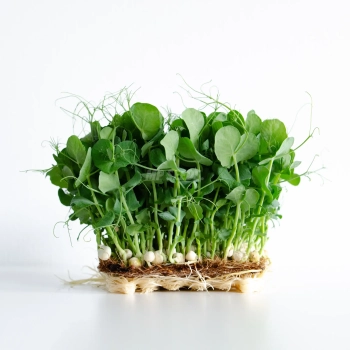
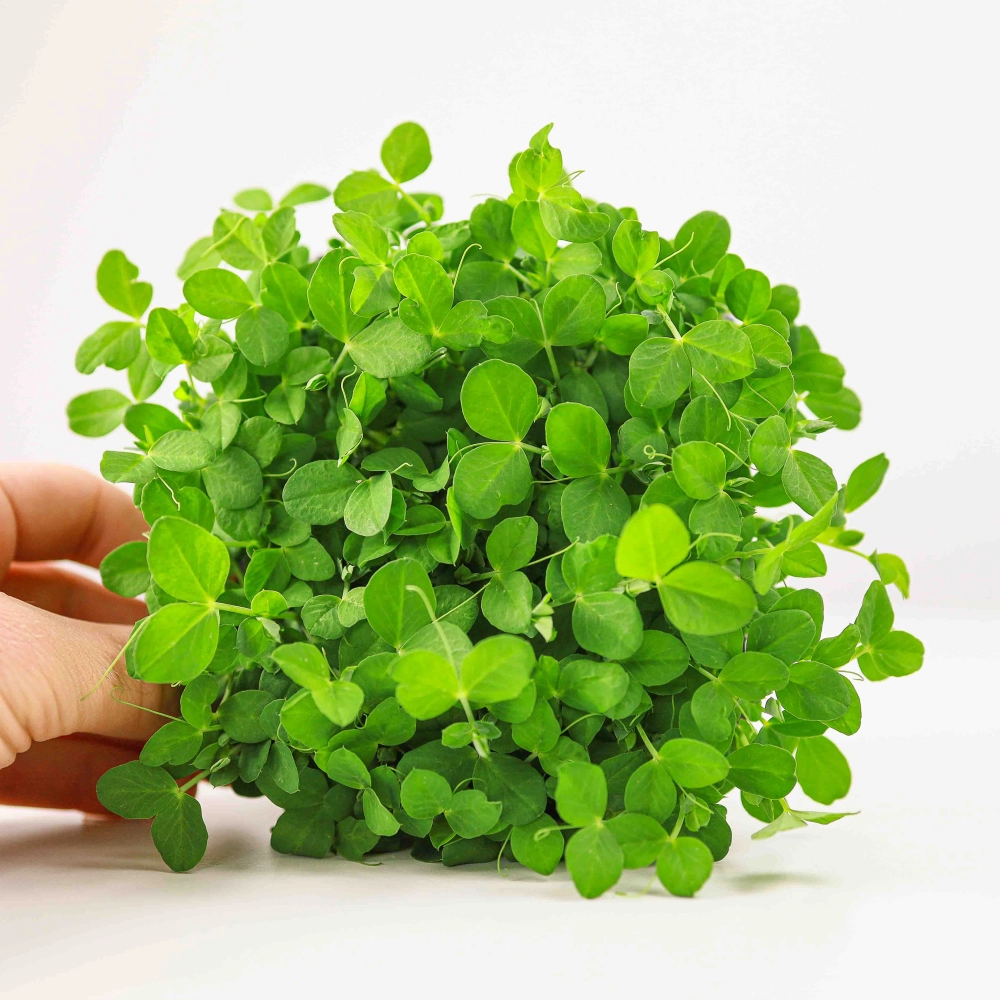
Dunn pea microgreens grow into long green stems and broad leaves without the curled tendrils of Afila-type peas. Choose Pea Dunn microgreens seeds for crisp, mildly sweet shoots that work as a salad base, a fresh sandwich filling or an easy-to-arrange garnish.
The leafy shape makes Dunn a practical choice when you want the greens themselves to form part of the dish. Their clean outline is useful for both everyday meals and restaurant presentation. These conventional Dunn pea seeds are intended for growing microgreens, with a recommended sowing rate of 280 g per 10 × 20-inch tray.
For decorative curls, consider Pea Foxy or Pea White. Foxy has more pronounced curled tendrils; White has shorter, fewer curls. Dunn offers a different look: longer leafy shoots without those curled tendrils.
| Variety | Pea Dunn |
|---|---|
| Certification | Conventional seeds |
| Seed Category | Microgreens seeds |
| Latin Name | Pisum sativum |
| Difficulty Level | Medium |
| Seed count per gram | Approximately 13 seeds |
| Sow density 10x20 tray | 280 g per 10 × 20-inch tray |
| Sprout in low temp. | Yes |
| Soaking | 8–12 hours |
| Watering | Frequent |
| Blackout Time | 3–4 days |
| Total growing time | 7–9 days in total, including blackout |
| Taste | Fresh, slightly nutty and sweet |
| Stem Color | Green |
| Leaves Color | Green |
| Nutrition benefits | Vitamin C, potassium, calcium and magnesium |
Taste and appearance of Pea Dunn
Dunn has a delicate pea flavour with subtle sweetness and a mild nutty note. The shoots are crisp, tender and sturdy enough to use in a salad or sandwich. Their mild taste pairs comfortably with other vegetables, grains and your chosen fillings.
Long green stems and broad green leaves give the crop its distinctive leafy appearance. There are no curled tendrils to separate before arranging the shoots. This structure makes Dunn especially useful as an alternative to lettuce in salads, as well as for clean garnishes on a finished plate.
How to grow Pea Dunn
Grow these pea microgreens seeds in trays with a suitable growing medium. Prepare your tray, water and growing space before soaking. Use the recommended sowing quantity for this variety rather than assuming all peas need the same amount.
- Soak for 8–12 hours. Use enough water for the peas to swell, then drain before sowing.
- Prepare the growing medium. Coco mats are one option for Dunn. When growing on coco mats, include a suitable nutrient solution in the growing method.
- Sow evenly. Spread 280 g of seed across a 10 × 20-inch tray and water after sowing.
- Keep in blackout for 3–4 days. Maintain moisture during germination and provide airflow. Check the crop regularly and avoid leaving it waterlogged.
- Move into light. Once the seeds have germinated, provide sufficient natural or artificial light for the shoots to develop.
- Water as the crop needs it. Keep the growing medium moist while allowing air around the roots and shoots. Check moisture frequently as the crop grows.
- Harvest the young shoots. The suggested total growing time is 7–9 days, including the 3–4-day blackout stage. Watch for the characteristic long stems and developed leaves, and cut above the growing medium with clean scissors when the texture suits your use.
Use the harvested shoots fresh for their crisp texture. The pea microgreens growing guide provides a fuller walkthrough of tray growing.
How to use Pea Dunn
Use pea shoots from Dunn wherever you want leafy volume, a mild pea flavour and a fresh crunch. The broad leaves and absence of curled tendrils make these greens easy to handle and arrange.
- Salad base: use Dunn in place of lettuce or mix it with other salad leaves. Its long stems and broad leaves bring both volume and texture.
- Sandwiches and wraps: add the shoots with your chosen filling for a crisp, fresh layer.
- Smoothies: blend a handful with the other ingredients for a fresh green addition.
- Rice and grain bowls: scatter over the finished bowl or serve as a leafy side.
- Egg dishes and soups: add close to serving time for a contrast in texture.
- Garnishes and appetisers: arrange a small portion to show the long stems and broad leaves.
- Stir-fries and other warm dishes: add near the end of cooking when you want to retain some crunch.
Serve raw for a crisp bite or add to a warm dish according to your recipe. Use a few shoots to finish a plate, or a larger portion when you want the greens to be a main part of a salad.
What are the nutritional benefits of Pea Dunn
Pea microgreens contain vitamin C and minerals including potassium, calcium and magnesium.
Pea Dunn adds broad green leaves, crisp stems and mild pea flavour to a varied diet. Use the leafy shoots as a salad base or a fresh sandwich filling, alongside other vegetables.
FAQ about Pea Dunn
What do Dun pea microgreens taste like?
Pea Dunn has a fresh pea flavour with subtle sweetness and a slightly nutty note. The crisp texture suits salads, sandwiches and garnishes.
Are Dunn pea microgreens the same as pea shoots?
Yes. The harvested young stems and leaves are pea shoots. Dunn produces leafy shoots without the curled tendrils associated with Afila-type varieties.
How does Dunn differ from Foxy and White?
Dunn has long stems, broad leaves and no curled tendrils. Foxy and White are Afila-type peas with decorative curls; White's curls are shorter and fewer than Foxy's. Choose according to the appearance and use you want.
Do the seeds need soaking, and how much should I sow?
Soak for 8–12 hours before sowing. Use 280 g per 10 × 20-inch tray. There are approximately 13 seeds per gram.
Can I eat the shoots raw or cooked?
Both are culinary options. Use fresh shoots in salads and wraps, or add towards the end of cooking in stir-fries and soups to keep some of their texture.
Can I order seeds for pea shoots in bulk?
For larger quantities, including enquiries above 500 kg, contact MP SEEDS to discuss pricing and availability.
Where can I find more advice about pea varieties?
See the pea varieties comparison for choosing between different shoots, the growing guide for practical instructions and the pea seed weevils guide for questions about insects in pea seeds.