15 Leaves You Can Eat: Vegetables, Herbs and Flowers
Many vegetables, herbs and flowering plants produce leaves you can eat. Beetroot, radish, broccoli, mustard, shiso and nasturtium are just a few examples. However, a green leaf is not automatically edible. Safety depends on the exact plant species, the part being harvested, its growing conditions and whether it should be eaten raw or cooked.
This guide compares 15 edible leaves, including familiar vegetable greens and less common choices used by chefs. You will learn what each one tastes like, how to prepare it and whether it is best harvested as a microgreen, baby leaf, young leaf or mature leaf. We will also explain why sprouts, microgreens and larger leaves are not interchangeable, even when they come from the same species.
1. What leaves can you eat?
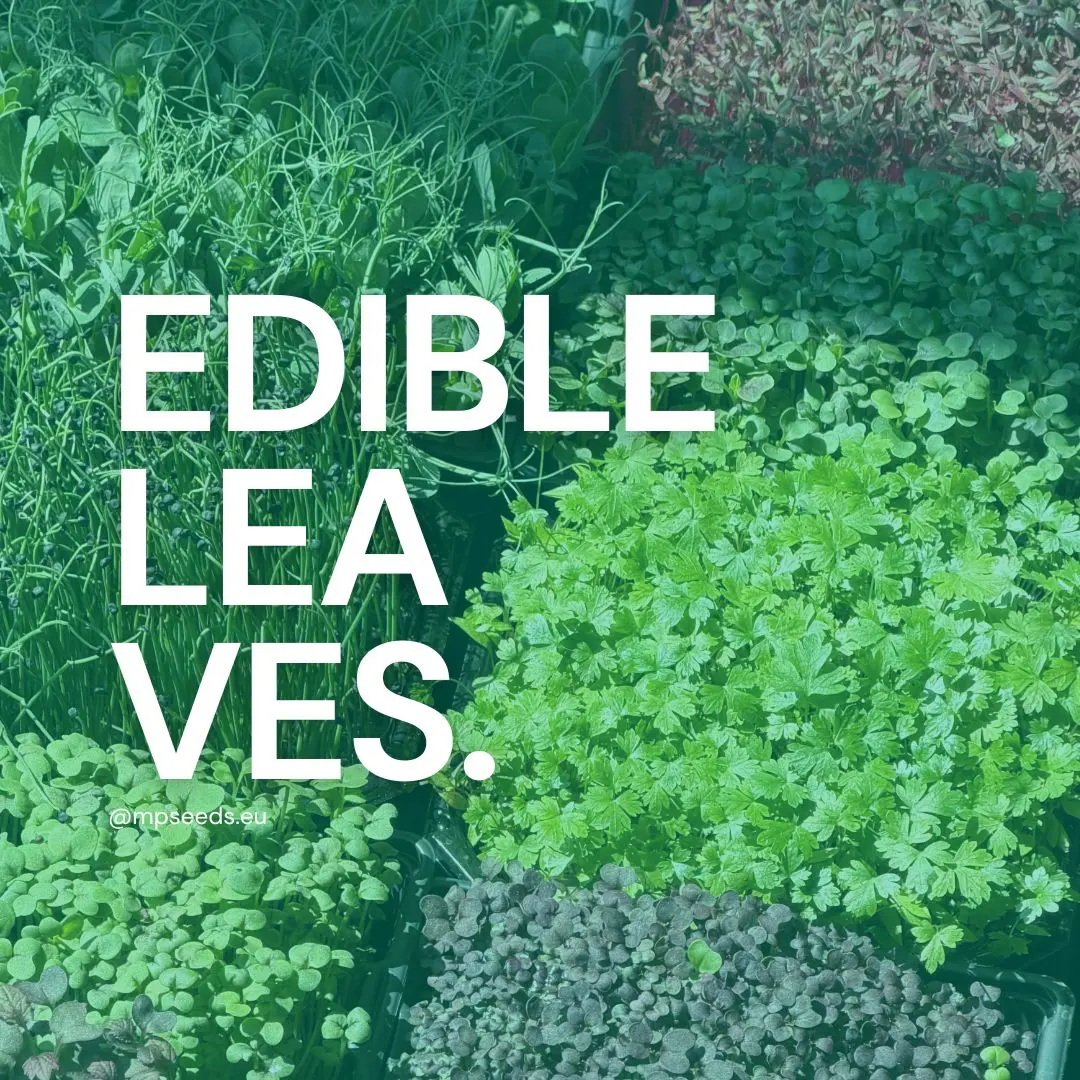
The leaves we eat generally fall into three useful groups: vegetable leaves, herbs and speciality greens, and leaves from flowering plants. The first group includes familiar crops such as beetroot, radish and broccoli. Although these vegetables are often grown for their roots, stems or flower heads, their leaves can also have a place in the kitchen.
Herb and speciality leaves are usually chosen for a more distinctive flavour. Shiso brings a complex herbal aroma, sorrel adds a sharp, lemony note, and fennel fronds have a mild anise flavour. These leaves are often used in smaller amounts as seasoning, garnish or part of a salad rather than as the main vegetable on the plate.
[product id="14, 312"]
Some flowering plants also produce edible leaves. Nasturtium is a good example, with rounded leaves and a fresh, peppery taste. However, an edible flower does not automatically mean that every other part of the same plant is suitable for eating.
In each case, edibility depends on the exact species and plant part. Preparation matters too: tender young leaves may work well raw, while larger or firmer leaves often benefit from steaming, sautéing or roasting. The comparison below shows which leaves are edible and how they are commonly used.
2. 15 leaves you can eat — quick comparison
This list of edible leaves includes vegetables, herbs and one flowering plant. The table gives a quick overview; the sections below explain the exact species, culinary uses and relevant growing stage in more detail.
3. What vegetable leaves can you eat?
Some vegetables grown mainly for their roots, thickened stems or flower heads also produce edible leaves. Radish, beetroot, kohlrabi, broccoli and cauliflower are useful examples. Their younger leaves are often tender enough for salads and garnishes, while larger leaves may have a firmer texture that suits cooking. This does not mean that every part of every vegetable plant is edible, so the exact species and recommended preparation still matter.
Radish leaves

Radish leaves, or radish greens, come from Raphanus sativus, the same species that produces the familiar peppery root. Young leaves have a fresh, spicy flavour, while older ones can become firmer and slightly hairy. Tender leaves work raw in salads, sandwiches and pesto; larger leaves are often more pleasant when sautéed or added to soup. Radish can be harvested as a quick-growing microgreen, as a young leaf or at maturity. MP SEEDS offers a range of radish seeds for microgreens, but the growing instructions on that page apply to the microgreen stage. For a practical serving idea, try this radish microgreens pesto.
Broccoli leaves
Broccoli leaves come from Brassica oleracea var. italica. They have a mild cabbage-like flavour and a texture that becomes firmer as the plant develops, making larger leaves comparable to kale or collard greens in the kitchen. Young leaves can be sliced into salads or used as a garnish, while bigger leaves are better steamed, sautéed or added to soups. Broccoli is edible at the microgreen and later leaf stages, but each requires different growing and harvesting instructions. Broccoli Calabrese microgreens seeds are intended for harvesting before the true leaves develop. More information about the early stages is available in the broccoli microgreens guide.
[product id="48, 96"]
Mustard leaves
Mustard leaves, or mustard greens, from Brassica juncea are recognised by their sharp, mustard-like flavour. The intensity varies with the variety, growing conditions and harvest stage. Tender microgreens and young leaves can be used raw in salads, sandwiches and garnishes. Larger leaves may still be eaten raw, but cooking them in stir-fries, soups or sautés can soften both their texture and pungency. Mustard can therefore be harvested as a microgreen, baby leaf or mature green. The mustard seed range includes Red Giant and other varieties with different colours and flavour profiles. The mustard variety guide can help growers compare them.
Beetroot leaves
Beetroot leaves, also called beet greens, come from Beta vulgaris. Both the leaf blades and their tender stalks are edible. Young leaves have an earthy flavour similar to chard and can be added raw to salads or sandwiches. As they grow, the leaves and stems become firmer, making them better suited to steaming, sautéing or adding to soups. Beetroot can be harvested as a microgreen, baby leaf or mature green, depending on the intended texture and use. Beet Bulls Blood microgreens provide a colourful early-stage example with a robust, earthy flavour. The product instructions cover microgreen production, not the cultivation of full-sized beetroot leaves.
[product id="265, 331"]
Amaranth leaves
Amaranth leaves from Amaranthus tricolor can be eaten at several stages. Young leaves have a mild, slightly nutty flavour and may be used raw in salads or as a garnish. Larger leaves are usually cooked and can be sautéed, steamed or added to soups. Red varieties are particularly noticeable for their pink-red stems and maroon to purple foliage. Red Amaranth microgreens seeds are intended for producing small, colourful microgreens rather than full-sized leaf amaranth, so the product’s growing instructions apply only to that early harvest stage. For a culinary example using the smaller greens, see this red amaranth microgreens salad.
Kohlrabi leaves
Kohlrabi leaves belong to Brassica oleracea Gongylodes Group. They are a separate edible part of the plant from the rounded, thickened stem usually associated with kohlrabi. Young leaves have a mild cabbage flavour with a subtle peppery note and can be sliced into salads or added to sandwiches. Larger leaves develop a firmer texture and are better suited to steaming, sautéing or soups. Kohlrabi may be harvested as a microgreen or grown on for its larger leaves, but the production methods are different. Red Kohlrabi microgreens seeds are specifically intended for an early harvest, before the true-leaf stage begins.
[product id="24, 34"]
Celery leaves
Celery leaves come from Apium graveolens and have a stronger, more concentrated celery flavour than the stalks. Their savoury character makes them useful more like a herb than a large salad leaf. Fresh leaves can be chopped into salads, dressings or sandwich fillings, while cooked leaves work well in soups, sauces and stocks. They can be harvested as delicate microgreens or allowed to develop into larger leaves, although the texture and intensity will change. Celery Leafly microgreens seeds are intended for the early microgreen stage. According to the product instructions, this is a slower-growing variety, so its specific growing time should not be applied to other celery crops.
Cauliflower leaves
Cauliflower leaves come from Brassica oleracea var. *botrytis*, the same plant grown for its compact white or coloured head. The leaves have a mild cabbage-like flavour and a sturdy texture, particularly when fully developed. They are most commonly cooked rather than served raw. Try roasting them until the edges begin to crisp, steaming them as a side dish or slicing them into a stir-fry. Both younger and mature leaves can be used, with cooking time adjusted to their size and firmness. Using cauliflower leaves is also a practical way to make more of the harvested plant.
4. Edible herb and speciality leaves
Some edible leaves are used more like herbs, garnishes or specialist culinary ingredients than large leafy vegetables. Their flavours can be citrusy, anise-like, bitter or cucumber-fresh, so a small amount may be enough to shape a dish. This group also includes varieties harvested at different stages, from delicate microgreens to full-sized aromatic leaves.
Shiso / perilla leaves
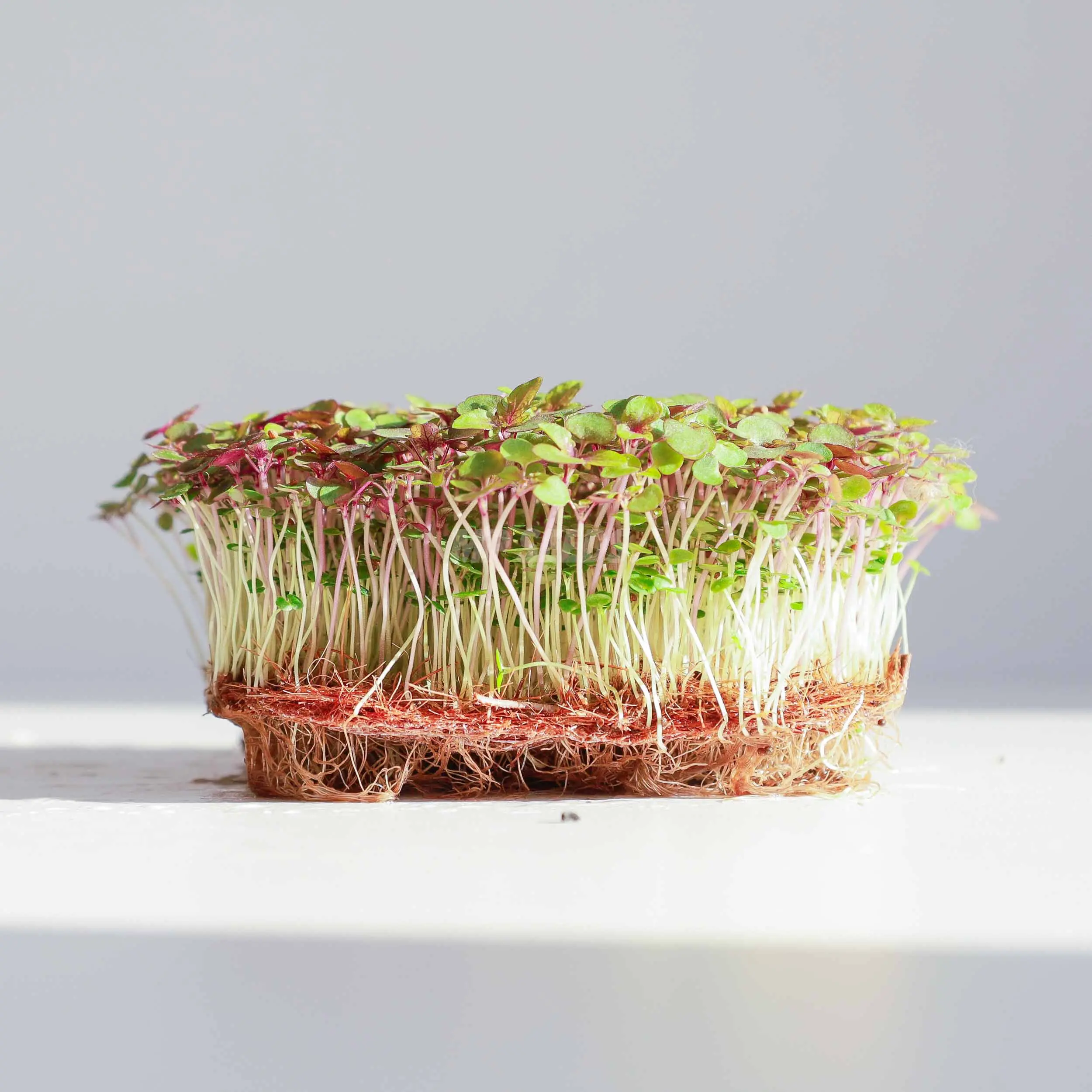
Shiso, also known as perilla, comes from Perilla frutescens. Its serrated leaves have a layered aroma combining notes of mint, basil, anise and citrus. Mature leaves can be served raw with sushi or seafood, used as wraps, pickled, fermented or added to hot dishes. The smaller microgreens work well in salads, cold dishes and garnishes where their colour and aroma remain noticeable. Shiso can therefore be harvested as a microgreen or allowed to develop into full-sized leaves. Perilla Red Shiso seeds can be grown for both stages, but they develop slowly and the harvesting point should be chosen before sowing.
Sorrel leaves
Red-veined sorrel, Rumex sanguineus, has green leaves marked by deep red veins and a sharp, lemony flavour. The young leaves can be used raw to add acidity to salads, sandwiches and garnishes, while larger leaves may be cooked into soups or sauces. It can be harvested as a baby leaf or grown to a mature size, depending on the texture and intensity required. Sorrel contains oxalic acid, which contributes to its tangy taste, so it is best treated as an accent and eaten in moderation rather than as the main salad leaf. Red Veined Sorrel seeds are slow-growing and require more patience than fast crops such as radish.
[product id="190, 292"]
Fennel leaves
Fennel leaves, or fronds, come from Foeniculum vulgare. Their fine, feathery appearance is matched by a mild, sweet anise flavour. Fresh fronds can be chopped into salads, dips and dressings or scattered over a finished dish. They can also be stirred into soups or sauces near the end of cooking, which helps retain their aroma. Fennel may be harvested as a microgreen or allowed to grow into mature fronds, with the later stage producing a different texture and a more herb-like ingredient. Fennel microgreens seeds are intended for the early stage, with harvesting around true-leaf development according to the product instructions.
Shungiku leaves
Shungiku, Glebionis coronaria — also known by the synonym Chrysanthemum coronarium — is an aromatic leafy plant used in several Asian cuisines. It is also called kikuna in Japan and tong hao in Chinese cooking. The serrated leaves have a distinctive bittersweet flavour with a lightly spicy, herbal edge. Young leaves can be eaten raw in salads or used as a garnish, while larger leaves are usually cooked briefly in soups, stir-fries or hotpots so they retain their character. Shungiku can be harvested as a microgreen or young leaf. Shungiku microgreens seeds are suitable for an early harvest at the cotyledon or first true-leaf stage.
[product id="162, 197"]
Salad burnet leaves
Salad burnet, Sanguisorba minor, produces small, bright green leaves with serrated edges. Its flavour is subtle and fresh, combining cucumber-like notes with a mild earthy or nutty character. The leaves are best used raw, where their delicate taste remains clear. Add them to salads, use them as a garnish or mix them into dressings and cold drinks for a gentle cucumber note. Salad burnet is particularly suitable for harvesting as a baby leaf rather than as a very young, fast microgreen. According to the product guidance, baby leaves take approximately 21–23 days to develop. Salad Burnet edible leaves seeds are therefore a better fit for patient growers than those looking for a rapid crop.
Dandelion leaves
Dandelion leaves come from Taraxacum officinale. Their defining flavour is bitterness, which is usually gentler in young leaves and more pronounced as the plant matures. Tender young leaves can be mixed into salads or used in sandwiches, especially alongside milder ingredients. Older leaves are often more enjoyable when sautéed or added to soups, where cooking softens their texture and intensity. Dandelion can also be harvested as a microgreen, although it grows more slowly than crops such as radish or broccoli. Dandelion microgreens seeds are intended for harvesting at this early stage, so the product instructions should not be treated as guidance for growing mature leaves.
[product id="100, 304"]
5. Flowering plants with edible leaves
Some flowering plants also produce useful edible foliage, but edible flowers do not automatically mean that every part of a plant is suitable for eating. The exact species and plant part still need to be identified.
Nasturtium leaves

Nasturtium leaves come from Tropaeolum majus. Their round, shield-like shape makes them easy to recognise, while their flavour is fresh, peppery and slightly spicy. Young leaves and microgreens are mainly used raw in salads, sandwiches and wraps or as a garnish for soups and egg dishes. Larger leaves can also be chopped when a stronger peppery note is wanted. The plant produces edible flowers as well, although this section focuses on its leaves. The nasturtium seed range includes varieties suitable for growing edible leaves and flowers. More detailed advice for the early stage is available in the nasturtium microgreens guide.
[product id="84, 189"]
6. Microgreens, baby leaves and mature leaves — what is the difference?

The same plant may be edible at several stages, but sprouts, microgreens, baby leaves and mature leaves are not interchangeable terms. Each stage has a different structure, texture and growing method.
Sprouts are harvested very early, usually while the cotyledons — the seed leaves — are still undeveloped or only partly developed. True leaves have not yet begun to emerge. They are commonly produced without soil or another growing substrate.
Microgreens reach a later stage. Their cotyledons have opened, and the first true leaves may be starting to appear. They are normally grown in soil or another substrate and harvested by cutting the stems above the surface. Different crops reach this point at different speeds, so the correct harvest time should come from the instructions for the specific microgreens seeds.
Baby leaves are allowed to grow longer. They have developed several true leaves but have not yet reached their full mature size. At this stage, the leaves are generally more substantial than microgreens while remaining relatively tender.
Mature leaves are the full-sized foliage of the plant. They may have a firmer texture, stronger flavour and different culinary use from their microgreen or baby-leaf counterparts. A mature beetroot or cauliflower leaf, for example, may benefit from cooking even when the younger growth can be served raw.
A species can be edible at more than one of these stages, but that does not make its growing instructions universal. A seed product intended for microgreen production may specify a particular sowing density, blackout period and early harvest point. Those directions should not automatically be extended to baby or mature leaves. For a closer comparison, read the guide to sprouts, microgreens and baby greens.
What leaves are safe to eat?
For the leaves in this guide, safe use mostly comes down to three simple checks: the exact species, the source of the plant and the recommended preparation. A reliable label or product description is more useful than identifying a plant by appearance alone, especially when similar leaves occur across different species.
When growing from seed, choose varieties intended for food production and follow the guidance supplied for that product. With garden plants, it also helps to know how they were grown and whether any crop protection products were used. This is particularly relevant to ornamental plants or leaves collected away from a managed food crop.
Next, check how the leaf is normally prepared. Some are at their best raw and young, while others become more enjoyable after steaming, sautéing or roasting. Starting with a small portion is a sensible way to try any new ingredient and see whether its flavour suits you, while also taking known food allergies into account.
Sorrel is one example where portion size matters. Its lemony acidity is linked to oxalic acid, and the RHS guidance on sheep’s sorrel recommends using the leaves in small amounts. Red-veined sorrel is a different species, Rumex sanguineus, but it is still best used as a sharp accent in salads, sauces or soups rather than as the main leafy ingredient.
How to grow edible leaves from seed
Before sowing, decide which stage you want to harvest. A tray intended for microgreens will be sown and managed differently from plants grown for baby or mature leaves. The target stage affects seed density, spacing, growing time and the amount of room the roots will need.
Next, check the instructions for the exact variety. Some seeds benefit from soaking, while others should be sown dry. Blackout time also varies: a fast crop such as radish behaves differently from slower varieties such as shiso, sorrel or dandelion. The same applies to sowing density and total growing time, so avoid using one set of numbers for every species. If your target is the early stage, the MP SEEDS guide on how to grow microgreens explains the basic process.
Good hygiene supports a cleaner and more predictable harvest. Start with clean trays and tools, use water suitable for food crops and keep the part being harvested away from direct contact with the growing medium. When cutting microgreens, use clean, sharp scissors and cut above the substrate.
An earlier harvest often gives a more delicate texture, but “earlier” means something different for each crop. Radish microgreens can develop quickly, while speciality leaves may need considerably more time. Follow the product description rather than relying on a universal harvest day.
Once harvested, use the leaves according to their texture and flavour. The guide to preparing and eating microgreens offers practical ideas for the early stage. To compare suitable crops, explore seeds for growing edible leaves, microgreens and speciality greens, and follow the instructions provided for each variety.
Frequently asked questions
What are some common leaves you can eat?
Common examples include beetroot, radish, broccoli, mustard, celery and cauliflower leaves. Less familiar options include shiso, shungiku, salad burnet and nasturtium. Each has a different flavour, texture and preferred preparation, so check the exact species and whether the leaves are best used raw or cooked.
Can you eat vegetable leaves raw?
Some vegetable leaves can be eaten raw, especially when harvested young and tender. Radish, broccoli, mustard, beetroot and amaranth leaves can all work in raw dishes at an early stage. Larger leaves often become firmer or stronger in flavour and may be more enjoyable steamed, sautéed, roasted or added to soup.
Are microgreens the same as baby leaves?
No. Microgreens are harvested after the cotyledons open and around the emergence of the first true leaves. Baby leaves grow for longer and develop several true leaves before harvest. They are larger and more substantial, but have not yet reached the size or texture of fully mature foliage.
Which edible leaves are easiest to grow from seed?
Among the varieties in this guide, radish, broccoli and mustard are practical starting points for microgreen production because their product instructions describe them as fast or easy growers. The easiest option still depends on the growing system, temperature and intended harvest stage, so follow the directions for the exact variety.
How can you tell whether a leaf is safe to eat?
Confirm the plant’s exact species and use a reliable food-growing source or product description rather than appearance alone. Check which part is edible, whether it is intended for raw or cooked use and how the plant was grown. If trying an unfamiliar leaf, begin with a small amount and account for known allergies or dietary restrictions.
Final takeaway
Vegetable greens, aromatic herbs and flowering plants all offer leaves with distinct flavours and culinary uses. Radish and mustard bring peppery heat, beetroot and amaranth add earthy notes, while shiso, fennel and salad burnet work more like fresh herbs. Nasturtium shows that edible foliage can also come from a plant better known for its flowers.
The key is to match the exact species with the right harvest stage and preparation. A tender microgreen, a baby leaf and a mature leaf from the same plant may differ in texture, intensity and the way they are best used. Decide what you want to harvest before sowing, then follow the instructions for that variety. To compare options for your next crop, explore MP SEEDS’ seeds for growing edible leaves.



 Menu
Menu