Growing Microgreens in Winter: Varieties That Sprout in Low Temperatures
Yes, you can grow microgreens in winter, including in a cooler room. When temperature, light, moisture and airflow are controlled, the crop can grow at much the same pace in any season. In a less-heated room or greenhouse, however, cooler trays may germinate more slowly, need less frequent watering and take longer to reach harvest.
If you grow in a greenhouse, garage, basement or room where the temperature drops in winter, start with varieties marked "Sprout in low temp.: Yes" on MP SEEDS product pages. Below you will find the confirmed varieties, normal growing times, useful temperature ranges and practical adjustments for cooler conditions.
Table of contents:
1. Can you grow microgreens in winter?
Yes. Microgreens can be grown throughout the year. If temperature, light, moisture and airflow remain within suitable ranges, the plants do not respond differently simply because it is winter. A crop grown under controlled conditions can follow the same routine and develop at a similar pace in every season.
Winter becomes relevant when the growing environment changes. Many growers use greenhouses, garages, basements or less-heated rooms where the temperature falls as the weather becomes colder. Under those conditions, seeds may emerge more slowly, the tray may develop less evenly and the growing medium may stay wet for longer.
Natural light can also weaken during winter. This matters only when the crop relies on daylight: an appropriate LED grow light can provide a consistent light period throughout the year. Adding warmth without correcting insufficient light will not solve pale or stretched growth.
The ability to sprout in cooler conditions does not make microgreens frost-hardy. At very low temperatures, germination may become slow, uneven or incomplete. This is different from producing a predictable tray in a properly controlled room.
Growers whose spaces become cooler in winter should choose a suitable variety, measure the conditions beside the tray and adjust watering, lighting, airflow and timing only where the environment requires it.
[product id="326, 333"]
2. What “Sprout in low temp.” means on MP SEEDS product pages
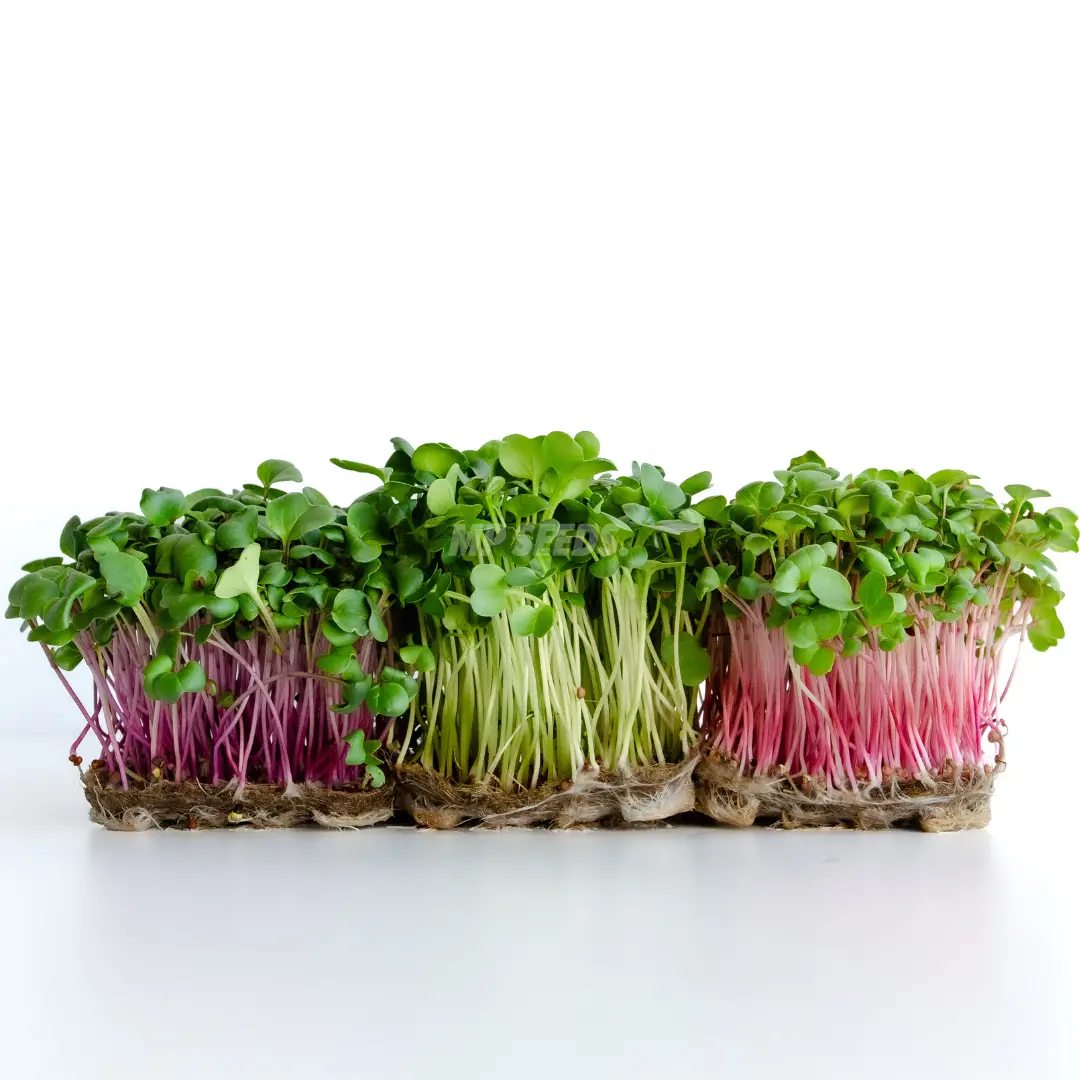
On MP SEEDS product pages, “Sprout in low temp.: Yes” identifies varieties whose germination in cooler conditions is confirmed. The label helps growers choose seeds when their greenhouse, garage or other production space becomes colder, but it does not specify a minimum temperature, test duration or expected germination percentage.
The parameter concerns germination, not the complete production cycle. A seed may begin to germinate in a cool growing medium, while the resulting microgreens still need sufficient light, controlled moisture and airflow. Lower temperatures can also make emergence slower and less even, extending the time before the tray is ready for harvest.
The label should not be interpreted as frost-tolerant, frost-proof or suitable for any temperature. Performance can differ between species, varieties and seed lots, especially as conditions become colder.
In this guide, the label is therefore used as a practical indicator for choosing varieties for cooler conditions, not as a fixed temperature threshold. The next section explains which ranges are practical and what growers can expect as the temperature drops.
3. What temperature do microgreens need to grow?
Most microgreens germinate well at 18–24°C (65–75°F). A cool room at around 16–20°C (61–68°F) can still be suitable for many varieties, but germination and growth are likely to take longer. There is no single ideal temperature for every crop, so use the ranges below as practical guidance rather than a guarantee.
What the MP SEEDS low-temperature label tells you
The MP SEEDS label describes germination only; it is not a minimum-temperature specification or a guarantee of an even harvest.
A practical temperature range for a cooler growing space
These ranges overlap, but they describe different stages and crops. Measure the temperature beside the tray, rather than relying only on a wall thermostat. A windowsill or outside wall may be several degrees colder than the centre of the room, particularly at night.
[product id="48, 56"]
What happens as the temperature drops?
Below the usual germination range, seeds generally take longer to emerge and a tray may develop less evenly. The growing medium also stays wet for longer, while the final harvest date becomes harder to predict.
Laboratory studies show why possible germination at very low temperatures is not the same as reliable microgreens production. The findings below concern particular species, samples and test conditions, not every MP SEEDS variety. The rocket study and rapeseed study illustrate the difference.
Practical production data point in the same direction. In one SARE winter greenhouse trial , unheated trays became unreliable when the air remained below 16°C (60°F) : some crops failed, while others took three to four weeks. Light levels and growing conditions also changed during the trial, so this is a useful warning rather than a universal cut-off.
4. Best microgreens for winter: MP SEEDS varieties that sprout in low temperatures
Some microgreens are better suited to cooler growing conditions than others. The varieties below can germinate at lower temperatures, making them practical options for greenhouses, garages and other growing spaces where temperatures may drop during winter.
The tables show the normal total growing time for each variety under suitable conditions, regardless of the season. These are guidelines rather than guaranteed harvest dates. If your growing space becomes colder or receives less light, germination and growth may take longer. Always check how the shoots are developing before harvesting.
Brassicas
Brassicas offer a broad choice for growers working in cooler conditions. In a SARE winter greenhouse trial, mizuna, Red Russian kale, red cabbage and kohlrabi produced the most consistent yields at lower temperatures among the varieties tested. The result comes from one production trial, but it gives growers a useful starting point when an uncontrolled space cools down.
[product id="14, 22"]
Radishes
Radishes are useful for growers who want a relatively quick crop; the listed varieties have short growing times under suitable conditions. Radish Pink also provides a clear product-level example: its card recommends 20°C (68°F) for germination and about 16°C (61°F) after blackout.
[product id="2, 46"]
Growers comparing this group in more detail can also read why grow radish microgreens .
Mustards
Mustard is another good option for growing microgreens in cooler conditions. UC ANR also identifies mustard as a dependable crop for indoor winter growing.
However, growing conditions still matter. In a SARE winter greenhouse trial, some mustard varieties produced less consistent yields during colder months. If you're growing in an unheated greenhouse or garage, try to maintain stable temperatures and sufficient light for more even growth.
[product id="8, 331"]
For differences between the available options, see which mustard variety to grow .
Peas
Peas have large seeds, and We recommends soaking them for 8–12 hours before sowing. The varieties differ substantially in normal growing time, so check the entry for the pea you choose and assess the shoots before harvesting.
[product id="219, 289"]
For differences between the available types, see pea microgreens varieties compared .
Lettuce
Lettuce Crisp is a good option to consider when growing microgreens in cooler conditions. It can germinate at lower temperatures, although the process may take longer as the growing medium gets colder. Keep an eye on moisture levels and give the seedlings enough time to develop before harvesting.
Beets and chard
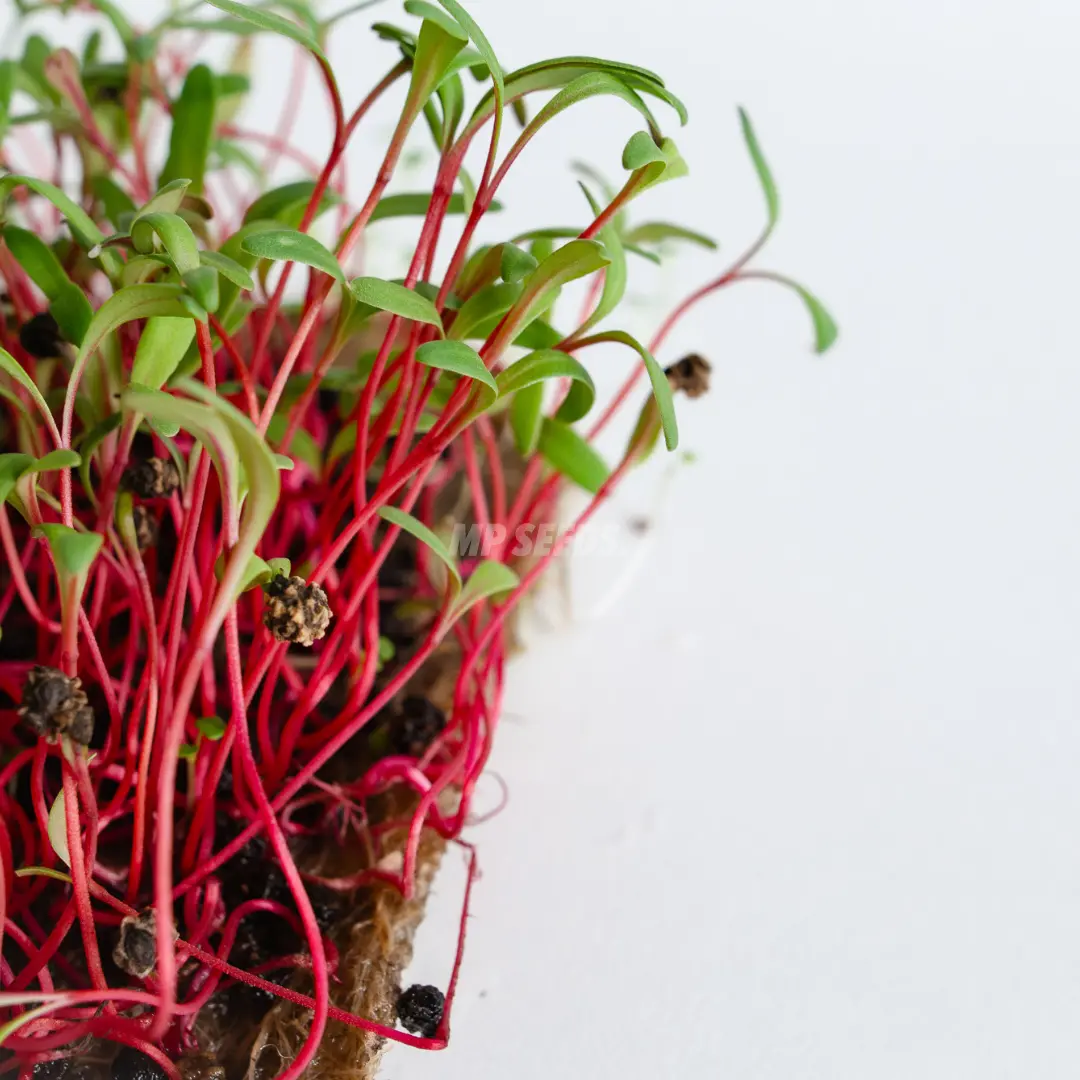
Beets and chard generally take longer than the radishes listed above. Their stems and leaves provide different colours, while the growing time depends on the individual variety.
Check moisture carefully during establishment: a cool, slow-growing tray may remain wet longer than expected.
[product id="28, 265"]
Onion family
Onion Barbra, leek and Chinese chives can all germinate in cooler conditions, although they grow at different rates. Onion Barbra is the quicker option, while leek and Chinese chives need more time to develop. Keep this in mind when planning your growing space, and check the shoots regularly to decide when they're ready to harvest.
[product id="36, 274"]
Other legumes and seeds
This group includes both quick crops such as alfalfa and red lentils and slower ones such as fava bean. Use each variety's growing time as a starting point rather than treating the group as one crop.
PopCorn is an exception to the general lighting advice. To produce yellow shoots, it needs complete darkness throughout cultivation. Harvested shoots should also be stored away from light.
Herbs and flowers
Dill, fennel, parsley and lemon balm typically require more time than brassicas or radishes. If shelf space is limited, plan these longer crops separately from quick harvests.
[product id="42, 178"]
Check these slower-growing trays regularly for moisture and airflow instead of following the same watering schedule as a fast radish crop.
5. Microgreens that need more warmth
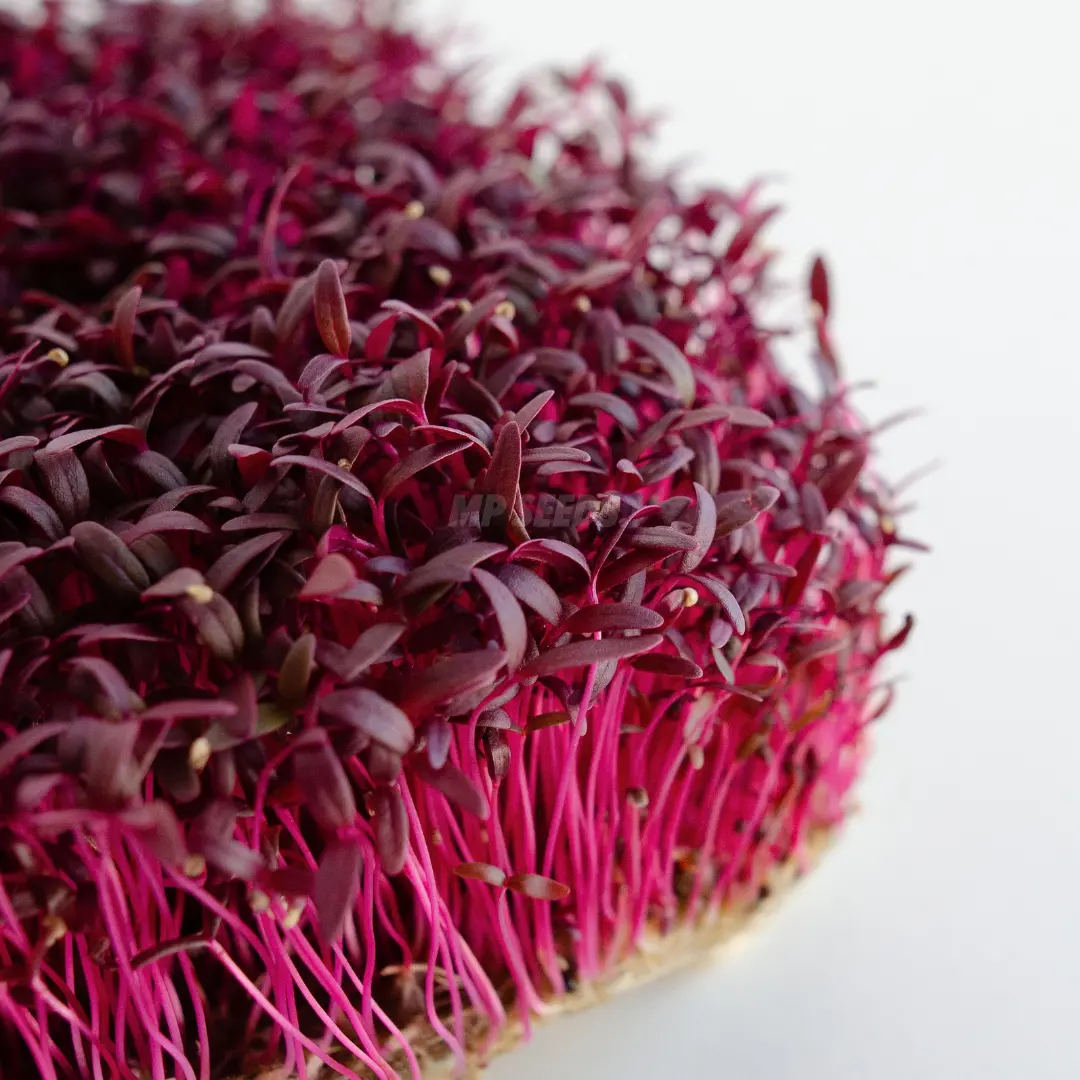
Not every microgreen is suitable for a consistently cool room. Amaranth is one of the clearest examples : in the SARE winter greenhouse trial, its growth became inconsistent when the average greenhouse temperature fell below approximately 18–21°C (65–70°F). This was a production observation from one greenhouse, not a universal germination cut-off, but it shows that adding more days does not always produce a reliable crop. SARE FNE14-800
For crops that prefer more warmth, use the warmest stable part of the growing room or warm only the germination stage. A heat mat with a thermostat can raise the temperature around the growing medium without heating the entire room.
If the room remains below a variety’s preferred range, choose a variety suited to cooler conditions instead of assuming that every crop will eventually recover . Some seeds may germinate slowly, while the resulting tray remains uneven or fails to reach a good harvest.
6. How to grow microgreens in a cold room
Microgreens can be grown in a cold room, but only the actual conditions around the tray affect the crop, not the season shown on the calendar. This section is for growers whose greenhouses, garages or other production spaces become cooler or darker in winter. If temperature and light remain controlled, the normal year-round routine can stay the same.
Measure the temperature at the tray, day and night
Place the thermometer at tray height instead of relying on a thermostat mounted elsewhere in the room. The centre of the room may feel comfortable while a shelf beside a window becomes several degrees colder.
Check the temperature after dark , when the room is most likely to cool down. If you use a heat mat, measure the growing medium with a probe so that you know what the seeds and roots actually experience.
Keep trays away from cold glass and outside walls
A bright windowsill may still be one of the coldest places in the room. Leave space between the tray and the glass, and do not allow leaves to touch a cold window. Outside walls and uninsulated surfaces can create similar cold spots.
Avoid placing trays directly above a radiator. The heat may dry the growing medium quickly and create large temperature changes between watering cycles.
Water less and check before you water
The growing medium dries more slowly when the tray is cool. Check its moisture before adding water by touching the surface or lifting the tray to judge its weight. A watering schedule developed for warmer conditions can leave a cool tray wet for too long.
Once the roots are established, water from below if your tray system allows it. This keeps the shoots drier and gives you more control over moisture. See how to water microgreens for the complete method.
Keep the air moving
Closed greenhouses or rooms, wet growing medium and slow growth in cool conditions can keep moisture around the leaves. Managing microgreens temperature and humidity together is important because stagnant, damp air increases the risk of mould and damping off.
Use gentle air movement rather than a strong draught directed at the tray. A small fan or short periods of ventilation can help. If you notice suspicious white growth, check how to prevent mould on microgreens and distinguish mould from harmless root hairs.
Add light when daylight is short
Pale, stretched or leaning seedlings often need more light, not only more warmth. This is most likely where growers rely on natural daylight, which becomes shorter and weaker in winter. UC ANR recommends 12–16 hours of light per day, while the University of Maryland suggests about 16 hours from all available sources. An LED grow lamp for microgreens can maintain a suitable light period regardless of the season.
Warm only the germination stage if necessary
Seeds usually need the most warmth while germinating. A thermostatically controlled heat mat can warm the root zone without heating the whole room. After emergence, many trays can continue in cooler conditions if they receive sufficient light and airflow.
A heat mat solves the problem of a cold tray, not every problem caused by a cold room. Continue checking moisture, light and air movement after germination. For help with when to uncover trays, see our guide to germination and blackout days .
Normal growing times remain useful throughout the year when conditions are controlled. Allow extra time only when the growing space becomes cooler or receives less light. In the SARE greenhouse trial , harvesting during December and January took nearly twice as long as during the warmer months, but temperature, daylight and other conditions also changed.
Allow extra days between sowing and the planned harvest. Judge readiness by the development of the crop rather than the date alone , and use the MP SEEDS guide to microgreens growing times as a starting point.
[product id="142, 272"]
7. Common winter problems and how to fix them
The problems covered below are usually linked to changes in the growing environment, especially lower tray temperatures, slower drying or weaker natural light. They are not caused by the season itself. Check the conditions at the tray before changing several parts of the routine at once.
Root hairs can sometimes be mistaken for mould. Before discarding a healthy tray, use the MP SEEDS guides to common germination problems and preventing mould on microgreens .
8. Frequently asked questions
Can you grow microgreens in winter?
Yes. Microgreens can be grown throughout the year. If temperature, light, moisture and airflow remain suitable, winter production does not need to differ from summer production. Extra adjustments are needed only when a greenhouse, garage or other growing space becomes cooler or receives less natural light .
Can you grow microgreens in an unheated room or garage?
It is possible if the tray stays within a workable temperature range for the chosen crop and receives enough light. Merely staying above freezing is not enough for reliable production. In the SARE trial , unheated trays became unreliable when air stayed below 16°C (60°F): some crops failed, while others needed three to four weeks.
What temperature is too cold for microgreens?
There is no single cut-off for every variety. Conditions below the usual practical growing range make germination slower, less even and harder to predict. Temperatures approaching freezing are unsuitable for dependable production, while frost can damage seedlings even when the seeds are marked as able to sprout in cooler conditions.
Do microgreens need a heat mat in winter?
Not always. Many suitable varieties can germinate in a cool room without a heat mat, although they may take longer. A thermostatically controlled mat is useful when the growing medium is too cold or when a warmth-loving crop needs help during germination.
How long do microgreens take to grow in winter?
If temperature, light and the other growing conditions remain controlled, microgreens should take about the same time in winter as at any other point in the year. They take longer only when the growing space becomes cooler or receives less light. In the SARE greenhouse trial , December and January harvests took nearly twice as long as during warmer months, but temperature, daylight and other conditions also changed.
Are microgreens that sprout in low temperatures frost-hardy?
No. Sprouting in a low temperature is not the same as frost hardiness. The label describes the seed’s ability to begin germinating in cooler conditions. It does not mean that seedlings can tolerate frost, freezing growing medium or sudden contact with very cold glass.
[product id="70, 166"]
9. Choosing microgreens for winter
Growing microgreens in winter is straightforward when the growing conditions remain stable. If your room, garage or greenhouse becomes cooler, choose a variety confirmed to sprout at lower temperatures, measure the temperature beside the tray and adjust watering and airflow as needed. Remember that the label refers to germination, not frost resistance or a guaranteed harvest date. Add light if daylight is insufficient, and plan extra growing time only when conditions change.
You can browse all microgreens seeds to compare suitable varieties and choose the next crop for your space.
[product id="56, 193"]
Sources
The temperature guidance and research examples above draw on the following references. Individual MP SEEDS product pages are linked in the variety tables.
SARE – Main Street Farms winter microgreens trial (FNE14-800)
University of California Agriculture and Natural Resources – Microgreens guidance
Penn State Extension – Growing Microgreens
University of Maryland Extension – Growing Microgreens and Baby Greens Indoors
Research on rocket seed germination at different temperatures
Research on rapeseed germination temperatures



 Menu